The Berceuse from 'The Exterminating Angel' was inspired by Kirill Gerstein's emotional response to a scene in the opera, leading Thomas Adès to arrange it as a piano piece.
Composer's Artistic Vision
Thomas Adès's music 'refracts, like a prism,' earlier traditions of pianism from composers like Chopin, Liszt, and Busoni, giving listeners a sense of orientation while still sounding new.
Recording & Production
This album features two world premiere recordings: the Concert Paraphrase on 'Powder Her Face' for Two Pianos and the Berceuse from 'The Exterminating Angel' for Piano.
Performer Biography
Pianist Kirill Gerstein first encountered Thomas Adès's music as a listener to his early CDs, but has been a frequent collaborator and inspirer of new pieces since 2012.
Compositional Technique
Thomas Adès's notation, particularly in 'In Seven Days,' uses 'irrational meters' to create a precisely shaped, written-out rubato, controlling time in a logical but asymmetrical way.
Interpretation
Pianist Kirill Gerstein describes Thomas Adès's music as requiring the 'manufacture of a key' to unlock its unique approach to musical time, similar to Busoni's philosophy.
Composition History
The Mazurkas for piano were originally composed for Chopin's bicentenary in 2010 and premiered by Emanuel Ax.
You might also enjoy...
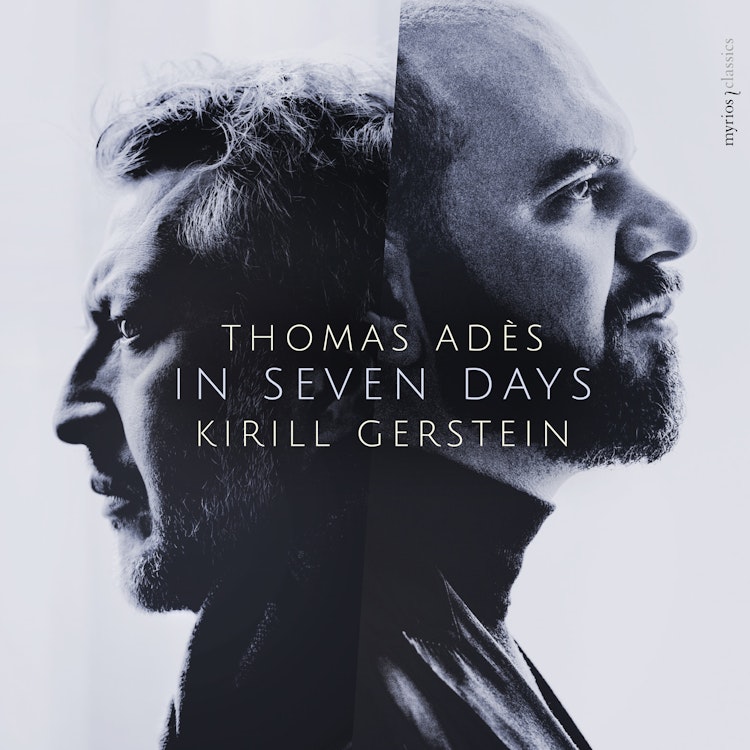
Thomas Adès: In Seven Days
Fazıl Say: Troy Sonata · 3 Ballads · Black Earth
Unus Mundus
Est-West-Central-South
Rooted Time
Donatoni: François Variationen - Gorli: Novellette, Studi in forma di variazione - Ja Lily - Il mulino di amleto
It’s Time: Royal Academy of Music Bicentenary Series