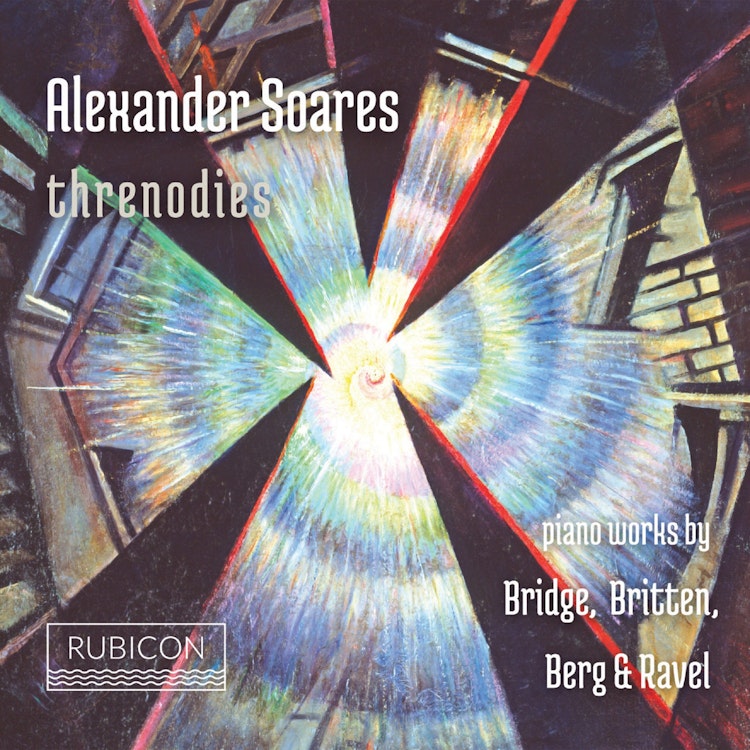
The album title, "threnodies," meaning a song of lamentation, reflects the essence of these memorials to those who fell in World War I.
Composition History
Both Frank Bridge's Piano Sonata and each movement of Maurice Ravel's Le Tombeau de Couperin were dedicated to those who died in World War I.
Composer's Artistic Vision
This recording aims to illuminate the position of Frank Bridge's monumental Piano Sonata by placing it alongside works by composers who influenced him (Alban Berg and Maurice Ravel) and his most famous pupil (Benjamin Britten).
Historical Context
The extreme social trauma of the Great War (1914-18) engulfed Europe and transformed the musical language of English composer Frank Bridge, leading to a new harmonic style.
Composer's Artistic Vision
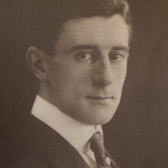
Maurice Ravel's Le Tombeau de Couperin pays tribute to the 18th-century French keyboard tradition and expresses a reaction to the war focused on memorial and renewal, rather than grief, through archaic forms and modality.
Compositional Technique
Alban Berg's Piano Sonata, Op. 1, though originally intended as a multi-movement work, was encouraged by his mentor Arnold Schoenberg to stand as a single movement, showcasing dense contrapuntal writing and 'developing variation'.
Composer Biography
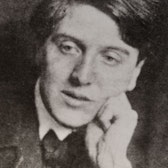
Frank Bridge, a pacifist, lost colleagues, including composer Ernest Farrar, in World War I, which shattered his pre-war illusions and led to a complete break from his earlier late-Romantic style.
You might also enjoy...
Marc-André Hamelin in a State of Jazz: Gulda, Kapustin, Weissenberg & Charles Trenet
Debussy: 12 Etudes / Boulez: Sonata No.2
Copland: Piano Fantasy - Ives: Piano Sonata No. 1
The Malcolm Smith Memorial Album
Concord (Live)
Danish Piano Music
Spohr & Onslow: Piano Sonatas & Other Works
20th Century Piano
Joubert: Chamber & Instrumental Music
Rautavaara, E.: Piano Music - The Fiddlers / Icons / Piano Sonata No. 1 / Etudes