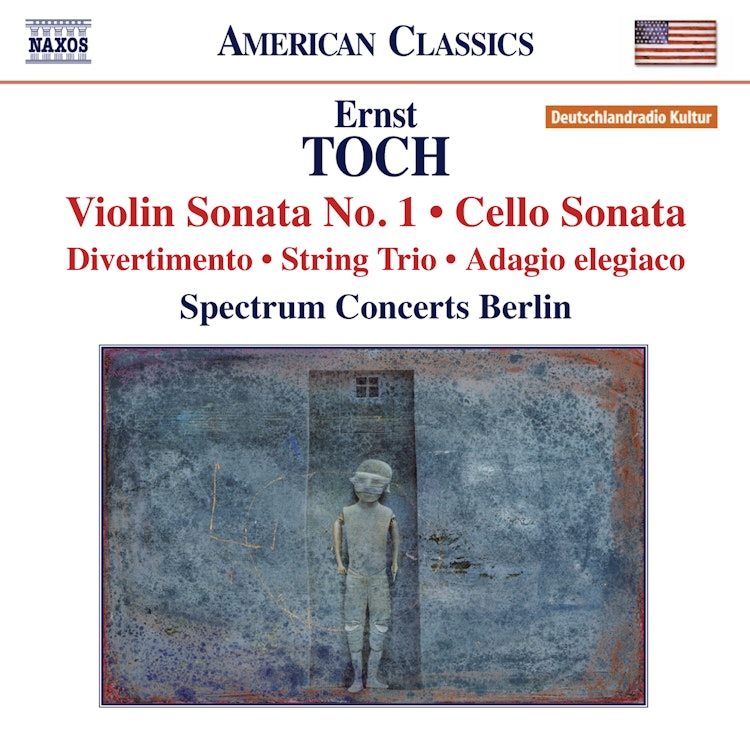
Ernst Toch's String Trio, Op. 63, written in 1936, is considered an 'exile work' because it helped him regain equilibrium after fleeing Nazi Germany, but also went unheeded for years, only being published in 1955.
Composer Biography
Ernst Toch, the composer, taught himself composition by transcribing Mozart string quartets and composing based on classical themes, then comparing his results to the masters.
Compositional Technique
The Adagio elegiaco by Ernst Toch is a commemorative piece based on a motif derived from the letters of the surname Fuchs (F, C, H, Es – F, C, B natural, E flat in German musical notation), which is quoted verbatim eleven times.
Compositional Technique
In his Divertimentos and Cello Sonata, Ernst Toch uses the term 'intermezzo' for central movements in the late Brahmsian sense, indicating a deliberate understatement and a limitation of musical material.
Performer Biography
Annette von Hehn, a violinist on this recording, plays the Yfrah Neaman Stradivarius, which is on loan from the Neaman family.
Composition History
Ernst Toch's First Violin Sonata, Op. 21, was affectionately called 'Brahms's Fourth' by his friends, both for its stylistic inspiration and because it completed Brahms's trio of sonatas with one in E major.
Historical Context
Many musicians to whom Ernst Toch dedicated his works, such as cellist Emanuel Feuerman and the Vienna String Quartet, emigrated from Germany or Austria to the United States or Palestine due to the Nazis, just as Toch did.
You might also enjoy...
The Boston Symphony Chamber Players Play Mozart, Brahms, Schubert, Poulenc, Cograss, Villa-Lobos and Haieff
Bassoon Trios
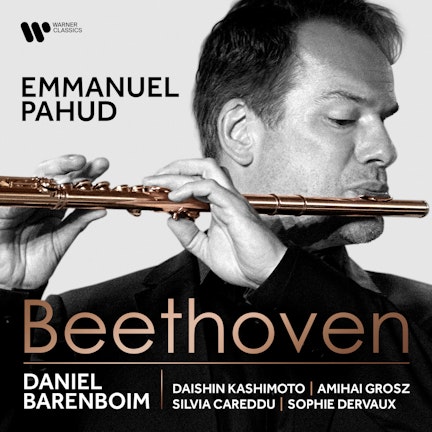
Beethoven: Works for Flute
Icon: Melos Ensemble
Classical Oboe
Ernst: Complete Music for Violin and Piano, Vol. 1
Zehetmair - Caprices: Paganini, Bach, Mozart
The Gilels-Kogan-Rostropovich Trio Recordings
C.P.E. Bach: Chamber Music for Clarinet
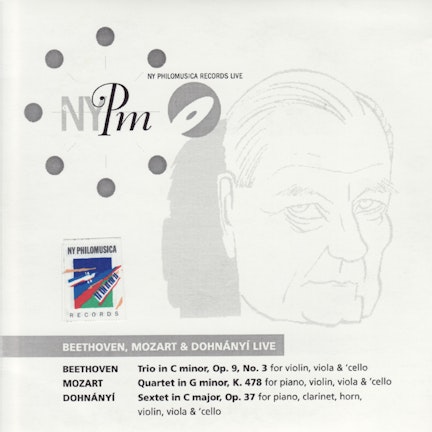
Beethoven, Mozart and Dohnányí Live
Chamber Music - Doppler, F. / Kuhlau, F. / Mozart, W.A. / Bohm, T. / Hugues, L. (Romantic Music for 2 Flutes and Piano)