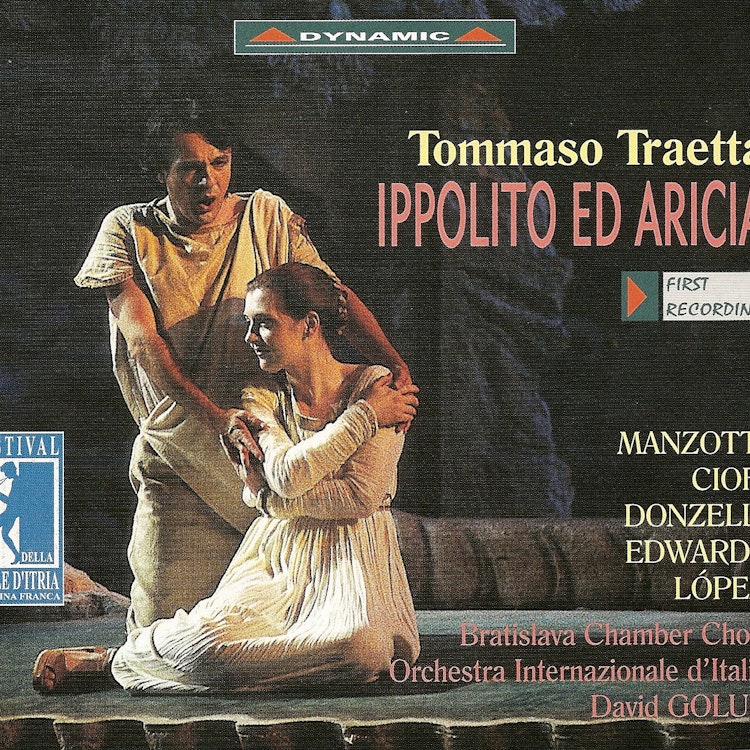
Traetta's primary inspiration for "Ippolito ed Aricia" was Rameau, particularly for the instrumental and choral writing, orchestral dances, and the psychological depth of characters.
Compositional Technique
The opera "Ippolito ed Aricia" incorporates choruses and dances as integral parts of the action, a feature maintained from French theatrical tradition.
Compositional Technique
The descriptive scenes in "Ippolito ed Aricia," such as the 'Tonnerre' (thunder) in Act One and the rough sea in Act Three, feature very accurate and effective instrumentation that sometimes takes a programmatic role.
Cultural Impact
After "Ippolito ed Aricia," Traetta continued his reform work and later secured a significant appointment at the court of Catherine II in St. Petersburg from 1768 to 1775.
Critical Reception
The premiere of "Ippolito ed Aricia" on March 9, 1759, received universal acclaim, with the sovereign fully satisfied and the music described as divine.
Compositional Technique
Traetta introduced 'obbligato' recitatives in "Ippolito ed Aricia" to reduce the contrast with arias and to emphasize the meaning of the words, creating continuity in the story.
Composition History
Tommaso Traetta's opera "Ippolito ed Aricia" was created in just six weeks, with the libretto by Carlo Innocenzo Frugoni, who adapted an earlier French text by abbé Pellégrin.