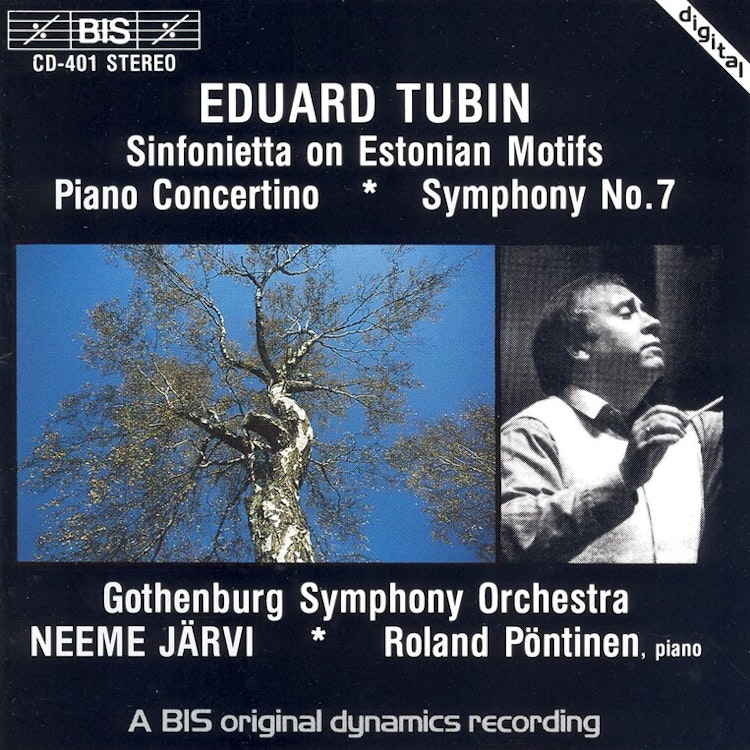
Tubin: Sinfonietta On Estonian Motifs / Symphony No. 7
1/1/1989, 9 Tracks, 1:08:32
Featuring
Neeme Järvi
Roland Pöntinen
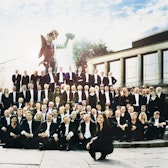
Göteborgs Symfoniker
Eduard Tubin
Did you know?
1/7
Notable Performances
The Concertino for Piano and Orchestra was first performed on Swedish Radio on October 16, 1945, with Estonian conductor and pianist Olav Roots as soloist.
Composer's Artistic Vision
After the 'apocalyptic storm' of his Sixth Symphony, Tubin stated that for his Seventh Symphony, he 'used the possibility of a small orchestra' and showed what could be created from very limited thematic material.
Performer Biography
Neeme Järvi emigrated to the United States in 1980 and has since worked with major orchestras and opera houses globally, including his debut at the Metropolitan Opera in 1978-79.
Composition History
The Concertino for Piano and Orchestra was Tubin's first major work composed in exile after fleeing to Sweden in 1944.
Performer Biography
Neeme Järvi, the conductor on this album, won first prize in the 1971 International Conducting Competition in Rome, which led to invitations to conduct major orchestras worldwide.
Composer Biography
Eduard Tubin, an Estonian composer, fled to Sweden with his family in September 1944, living and working in Stockholm until his death in 1982.
Composer's Artistic Vision
Tubin was impressed by the folk music research and application in classical music by Bartók and Kodály, which reawakened his interest in Estonian folk music.
You might also enjoy...
Carl Vine: Choral Symphony
American Orchestral Music
Lajtha: Symphonies Nos. 5 & 6
Guarnieri: Symphonies Nos. 1 and 4 / Abertura Festiva
Lajtha: Symphonies Nos. 3 and 4 / Suite No. 2
Peter Mennin: Symphonies 8 & 9
Ives: Symphony No. 1; Symphony No. 4; Central Park in the Dark
Diethelm: Symphonic Works
Hindemith: Orchestral Works, Vol. 5
Schnittke: Symphony No. 6 / Concerto Grosso No. 2
Hanson: Sym No.2/Sym No.4/Elegy
Frankel: Symphonies Nos. 4 and 6 - Mephistopheles Serenade