The 'tombeau' is an instrumental genre that emerged in the Baroque era as a posthumous tribute, not necessarily sad, but a solemn commemoration.
Composition History
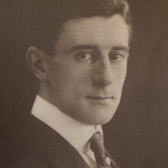
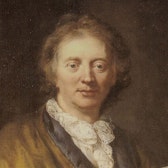
The Forlane from Maurice Ravel's Le Tombeau de Couperin was the first movement he completed and was inspired by his own transcription of a Forlane from François Couperin's Quatrième Concert Royal.
Interpretation
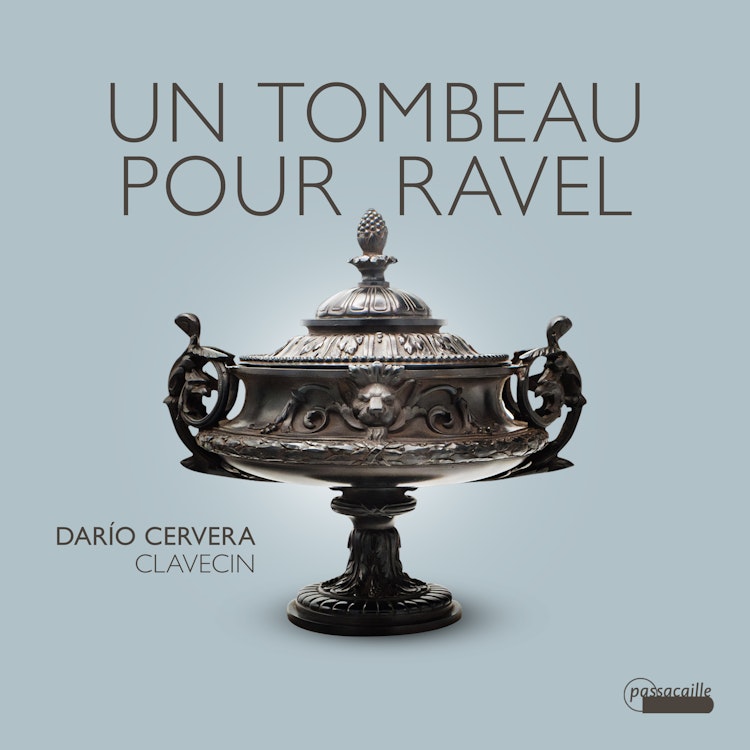
This album features four of Maurice Ravel's piano works, three of which are unusually performed on the harpsichord instead of the piano.
Composition History
Maurice Ravel dedicated the six pieces of Le Tombeau de Couperin to seven friends who died in the 1914-1918 war, adding these dedications later due to his traumatic wartime experiences.
Instruments
The album's program suggests that the harpsichord, which was relegated to the background throughout the 19th century, can be seen as the 'Belle' awakening after decades of sleep.
Composer Biography
Eugène Anthiome, whose Toccata is included on this album, was Maurice Ravel's piano teacher in 1889.
Composer's Artistic Vision
Maurice Ravel's Le Tombeau de Couperin pays homage not so much to François Couperin himself, but to 18th-century French music in general.
You might also enjoy...
Clavichord Recital
Varietas
Bach 333: Wilhelm Friedemann Bach Klavierbüchlein Complete
A Musical Journey Around Europe
pour passer la melancholie
Leonhardt Edition Vol.13 - J. Bull / J.J. Froberger