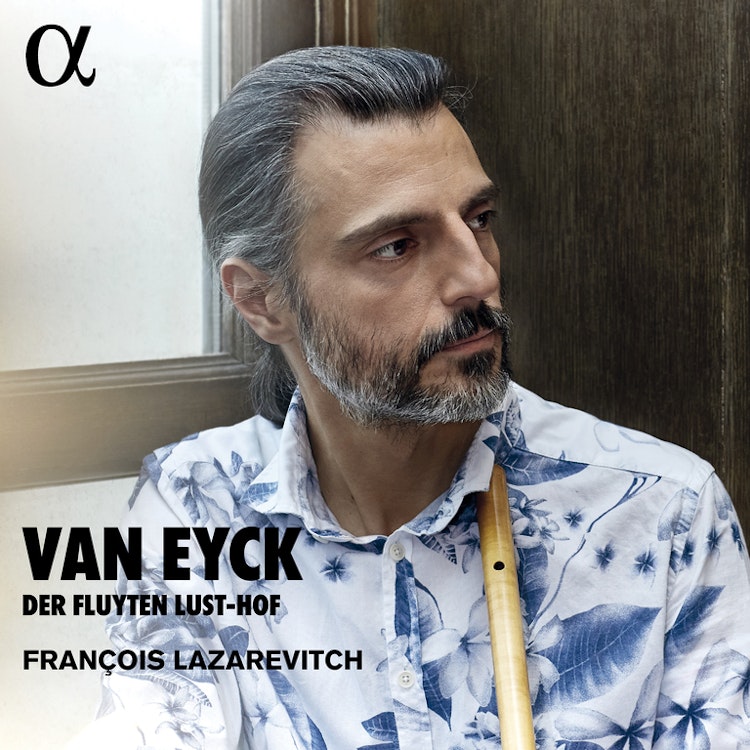
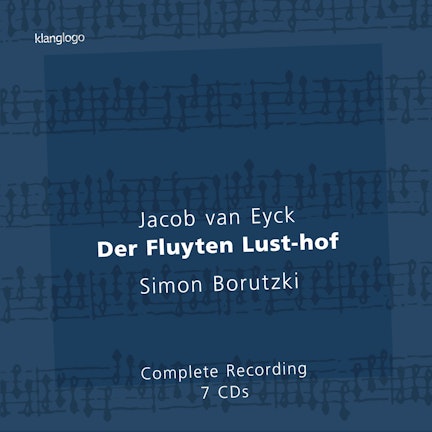
Jacob Van Eyck, the composer of these variations, was blind from birth and served as the carillon player for Utrecht Cathedral starting in 1625.
Composer Biography
Van Eyck was known for his extraordinary hearing, as his epitaph states: 'What God took away from his eyes, he granted to his ear.'
Composer's Artistic Vision
Van Eyck made significant advancements in understanding acoustics and bell-tuning, which earned him an international reputation and connected him with figures like Huygens, Descartes, and Mersenne.
Composition History
Van Eyck's 'Der Fluyten Lust-hof' is a large collection of variations for flute based on popular European musical pieces of the 17th century, including vocal music, airs, chansons, psalms, and dance tunes.
Instruments
The album features various flutes, including a soprano recorder (fluijtien) like the one Van Eyck used for his open-air concerts, and a small transverse treble flute in G, as indicated by historical tablatures.
Interpretation
Performer François Lazarevitch emphasizes the importance of 'lingua riversa' (rapid, supple tonguing) and rhythmic inequality in his interpretation to highlight melodic and harmonic points, imitating the 'gorgiare' vocal technique of the 16th and 17th centuries.
You might also enjoy...
Recorder Duets of Three Centuries
J.S. Bach: 6 Suites BWV 1007-1012 transcribed for recorder
Telemann: 12 Fantasias
Van Eyck: Selections from "Der Fluyten Lust-Hof" ("The Flute's Garden of Delights")
Telemann: 12 Solo Fantasias
Eyck: Evergreens From the Pleasure Garden
Telemann: Fantasien für Flöte Solo
Eyck: Fluyten Lust-Hof (Der) - Complete Recording
Barbara Heller: Hundertmelodienbuch Für Blockflöte Solo
Jacob van Eyck: Der Fluyten Lust-hof
Telemann: 12 fantasie per flauto solo: Tommaso Rossi
Yeagley, D.: Awakenings / Sonata No. 1 for Northern Plains Indian Flute