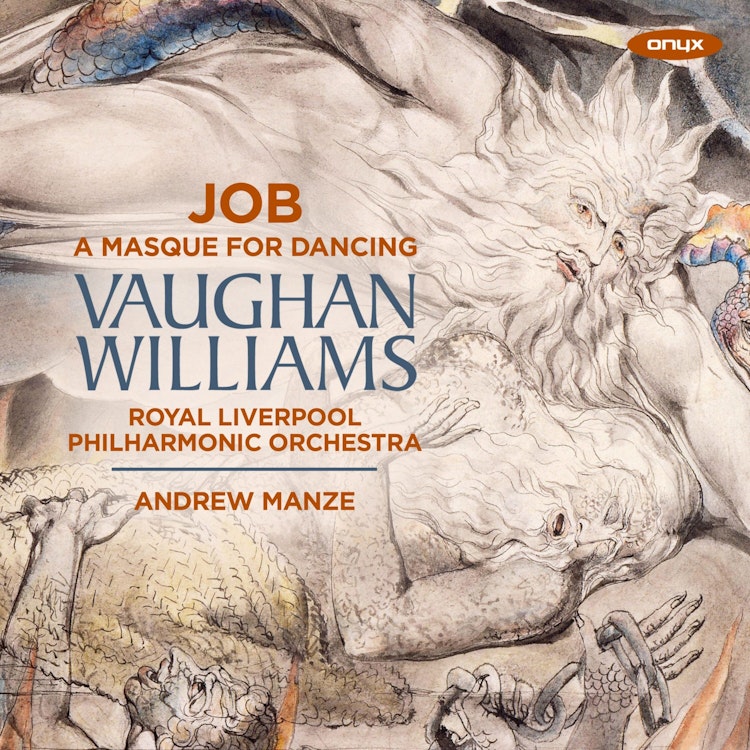
The first performances of 'Job' were in the concert hall in 1930 and 1931, both conducted by Vaughan Williams himself, before its stage premiere in London in July 1931.
Critical Reception
Serge Diaghilev, director of the Ballets Russes, rejected the 'Job' project as 'too English and old-fashioned' for a stage production.
Compositional Technique
The musical structure of 'Job', with its succession of varied episodes, is similar to how Vaughan Williams later structured his film scores.
Compositional Technique
The score of 'Job' features a strong contrast between the musical portrayals of God, which are powerful and majestic, and Satan, depicted by dissonant and rhythmic passages.
Composer's Artistic Vision
Vaughan Williams insisted on calling the work 'A Masque for Dancing' to avoid it being described as a ballet and to prevent conventional dancing en pointe.
Composition History
Vaughan Williams's interest in the 'Job' story came from William Blake's illustrations, particularly a celebrated series of 22 engravings from 1826.
Composition History
The idea for a ballet based on 'Job' was conceived by Geoffrey Keynes, a Blake scholar, and Gwen Raverat, Vaughan Williams's cousin, for the centenary of Blake's death in 1927.
You might also enjoy...
Delibes : Coppélia [Highlights]
Delibes: Coppélia/Massenet: Le Carillon
Adam: Filleule Des Fees (La) (Complete Ballet)
Bartók: The Wooden Prince, Op. 13
Carpenter: Skyscrapers
Britten: The Prince of the Pagodas
Christoph Willibald Gluck: Don Juan Ballet Music - Complete Recording
Delibes: Coppélia
Delibes: Coppelia (Highlights)
Martinů: Early Orchestral Works, Vol. 2
Adam: Giselle (Highlights)
SULLIVAN: Ile Enchantee (L') / Thespis
Falla: El sombrero de tres picos; Ritual Fire Dance