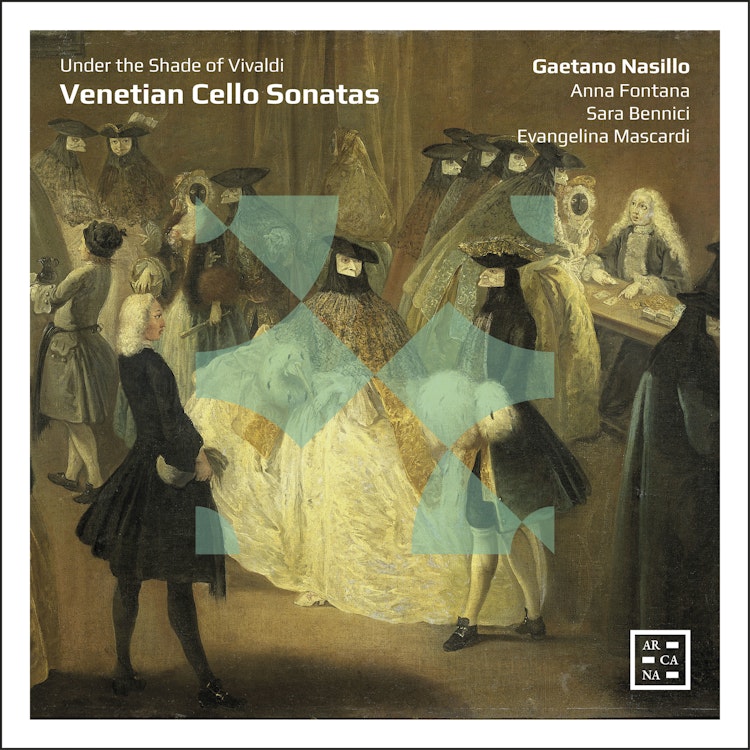
Venetian Cello Sonatas. Under the Shade of Vivaldi
8/16/2019, 30 Tracks, 1:17:16
Featuring
Gaetano Nasillo
Sara Bennici
Evangelina Mascardi
Anna Fontana
Gerolamo Bassani
Benedetto Marcello
Giovanni Benedetto Platti
Antonio Vivaldi
Diogenio Bigaglia
Antonio Vandini
Antonio Martinelli
Michele Stratico
Did you know?
1/7
Instruments
The recording features a violoncello by Antonio Ungarini from circa 1750, a harpsichord by Tony Chinnery (2002) after Carlo Grimaldi (1697), a violoncello by Barak Norman from circa 1717, and a theorbo by Francisco Hervas (1997).
Composer's Artistic Vision
The cello's eloquent, low-pitched tone was seen by contemporaries as the embodiment of a refined masculine voice.
Historical Context
The cello's 'golden age' began in the 1720s, becoming a favored instrument among upper-class amateur players and largely displacing the bass viol.
Compositional Technique
Most of the sonatas on this album follow the traditional four-movement (Slow-Fast-Slow-Fast) layout, with a few exceptions using the more modern three-movement (Slow-Fast-Fast) structure.
Historical Context
The violoncello, or cello, emerged as a solo instrument in the mid-17th century, evolving from the bass member of the violin family.
Compositional Technique
Composers recognized the cello's versatility, allowing it to perform melodies in tenor and alto registers, dialogue with itself, or add quick notes to the basso continuo line.
Historical Context
Bologna was initially the center for cello development by players and composers, but its popularity quickly spread across Italy and Northern Europe.
You might also enjoy...
Chameleon
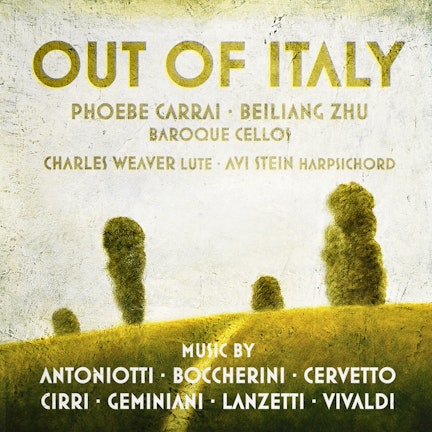
Out of Italy: Music of Antoniotti• Boccherini • Cervetto • Cirri • Geminiani • Lanzetti • Vivaldi