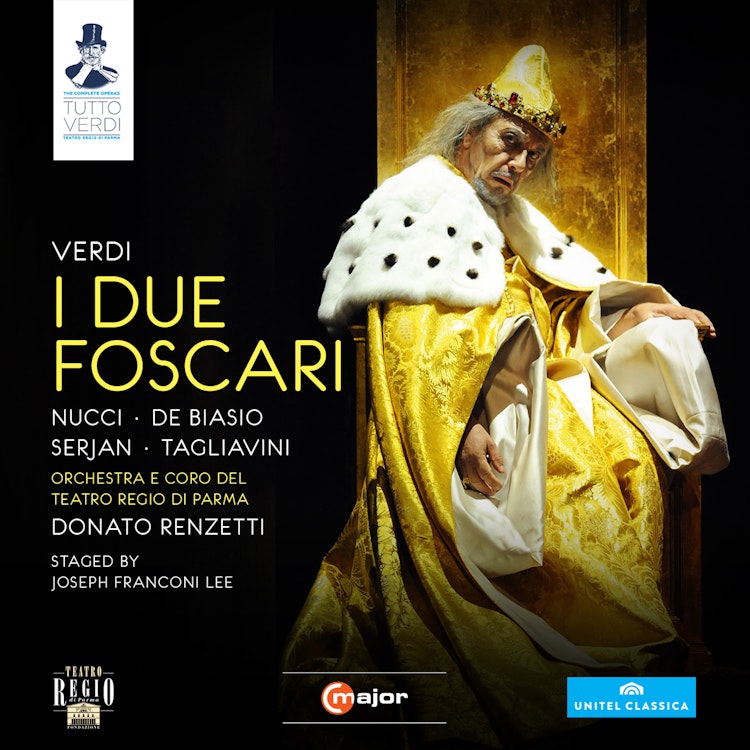
Despite Verdi's growing popularity, interest in "I due Foscari" remained muted after its 1844 premiere, with Verdi himself noting its "too monochrome" color.
Compositional Technique
In a significant departure for Verdi, the minor-key dungeon scene in Act II ends with a minor chord, rather than modulating to a major key to lighten the tone.
Compositional Technique
Verdi employed instrumental effects reminiscent of chiaroscuro painting techniques to distinguish characters, using dark low strings for the Foscari and bright flutes for the Venetian lagoon.
Composition History
Verdi wrote the Venetian opera "I due Foscari" for Rome in the summer of 1844, after an earlier plan to stage it in Venice failed due to aristocratic objections.
Composer's Artistic Vision
Verdi included a surprising allusion to his favorite writer, Alessandro Manzoni, in Act II, where Jacopo Foscari dreams of the innocent Conte di Carmagnola, the subject of Manzoni's 1820 tragedy.
Compositional Technique
Verdi used 'reminiscence motifs' (recurrent melodies for leading characters) to create unity in the opera, a practice common in French operas since the 1780s.
Composition History
The original plan to use Lord Byron's "The Two Foscari" as the basis for an opera in Venice was abandoned because Venetian aristocrats did not want to be reminded of their ancestors' inglorious role in 1457.