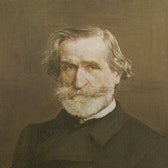
Some critics, like the famous conductor Hans von Bülow, initially considered Verdi's Messa da Requiem too theatrical for liturgical use, calling it 'an opera in church vestments'.
Compositional Technique
Verdi's Messa da Requiem incorporates traditional elements such as an impressive double fugue in the 'Sanctus' and an archaic tone in the 'Agnus Dei' reminiscent of Gregorian chant.
Composition History
The plan for a Requiem was revived four years later due to the death of Italian poet Alessandro Manzoni, whom Verdi deeply admired and considered a 'model of virtue and patriotism'.
Composition History
Verdi's Messa da Requiem originated from a collaborative project in 1868 to honor the recently deceased Gioachino Rossini, where 13 leading Italian composers were to contribute sections to a 'Mass for Rossini'.
Performer Biography
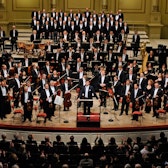
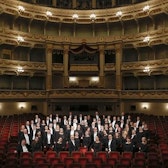
The Staatskapelle Dresden, founded in 1548, is one of the world's oldest and most traditional orchestras, with past directors including Heinrich Schütz, Carl Maria von Weber, and Richard Wagner.
Cultural Impact
During the dictatorial rule of the GDR, these annual memorial concerts in Dresden provided hope and reassurance to the East German citizens.
Historical Context
The Dresden Staatskapelle and State Opera Chorus annually perform a Requiem on February 13th to commemorate the 1945 bombing of Dresden, which killed thousands and destroyed much of the city.
You might also enjoy...
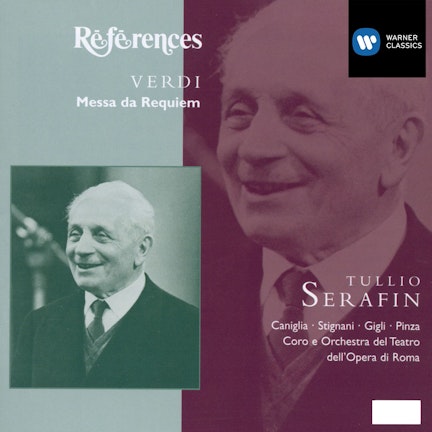
Verdi: Messa da Requiem
Verdi: Requiem
Verdi: Requiem (Live Recording, The Hague 1970)
Verdi : Messa di Requiem
Verdi : Requiem
Arthur Gottschalk: Requiem for the Living
Berlioz: Grande messe des morts, Op. 5, H. 75 "Requiem" (Live)