The 'Chorus of Hebrew Slaves' ('Va', pensiero, sull'ali dorate') from Verdi's Nabucco is still discussed today as a possible Italian national anthem.
Compositional Technique
Verdi deliberately omitted certain duets, including a proposed soprano and tenor duettino, from Nabucco because he felt they would 'cause the plot to go cold' and detract from the opera's 'Biblical grandeur'.
Composer's Artistic Vision
Verdi focused on the greed for power of the titular hero Nabucco and his illegitimate daughter Abigaille, an aspect that had deterred composer Otto Nicolai.
Historical Context
The idea that the 'Chorus of Hebrew Slaves' in Nabucco was immediately associated with Italian patriots' struggle for freedom is a legend, with a political message only attributed to it from the 1860s at the earliest.
Critical Reception
Early audiences of Verdi's Nabucco were more impressed by the fourth-act chorus 'Immenso Jehovah' than by the now-famous 'Chorus of Hebrew Slaves'.
Recording & Production
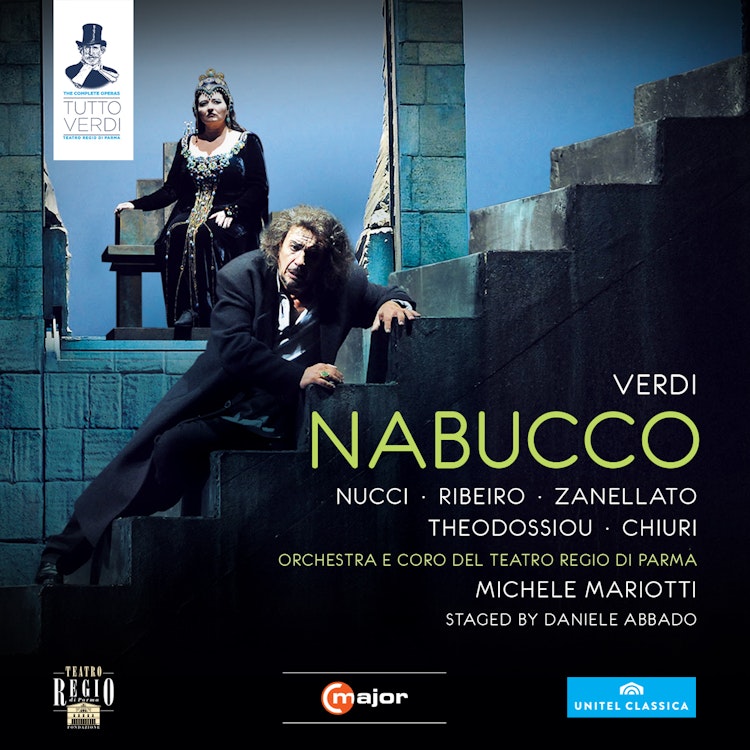
This recording of Verdi's Nabucco was made live at the Teatro Regio di Parma between October 12 and 14, 2009.
Composition History
Verdi's claim that he reluctantly set the libretto for Nabucco is considered a distortion of facts, as the libretto had been previously renounced by Otto Nicolai, composer of the successful opera Il templario.