This recording uses a Conrad Graf fortepiano opus 2772, dating from 1836-1841, chosen for its versatility to plausibly perform music from across the entire 19th century.
Composer Biography
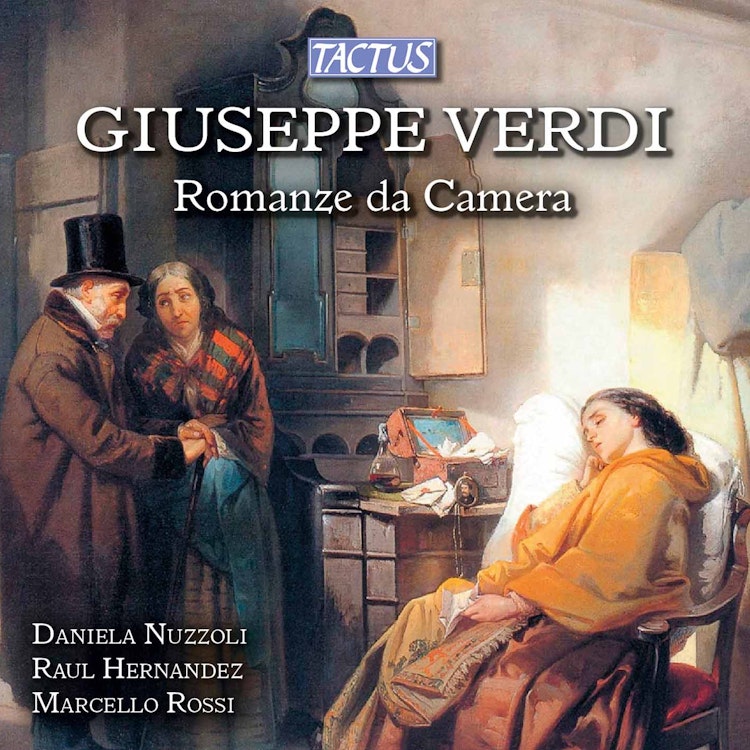
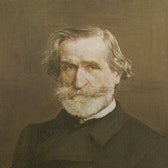
Giuseppe Verdi, though primarily known for his operas, also composed vocal chamber music, which has only recently become the subject of critical study and rediscovery.
Critical Reception
Verdi's collection of *Sei romanze* was so successful upon its 1838 publication that it was reprinted the following year, even before he achieved fame as an opera composer.
Composer's Artistic Vision
Verdi's choice to set texts from Johann Wolfgang von Goethe's *Faust* to music, translated by Luigi Balestra, demonstrates his early engagement with advanced European Romantic cultural trends.
Historical Context
Verdi's chamber romances reflect the social custom of private salon performances for 'dilettantes'—upper-middle-class amateur musicians who practiced music as part of their cultural education.
Composition History
Most of Verdi's chamber romances were written early in his career (1838-1847) to help him establish himself in the Milanese musical scene after moving from his hometown of Busseto.
Compositional Technique
Verdi's chamber romances sometimes share stylistic similarities with his operatic works; for example, fragments from "In solitaria stanza" are recognizable in Leonora's aria "Tacea la notte placida" from *Il Trovatore*.
You might also enjoy...
Rossini: Piano Music, Vol. 10
The World of Kathleen Ferrier
Duets. Songs by Purcell, Beethoven, Schubert, Saint-Saëns, Fauré...
Rita Streich - The Viennese Nightingale
Goethe-Lieder (Arr. C. Brandt for Voice & Guitar)
Isabel Bayrakdarian – La Zingarella: Through Romany Songland
Martinů: Songs, Vol. 2 - The Months
Irmgard Seefried - Ein Selbstporträt (Irmgard Seefried in Person)