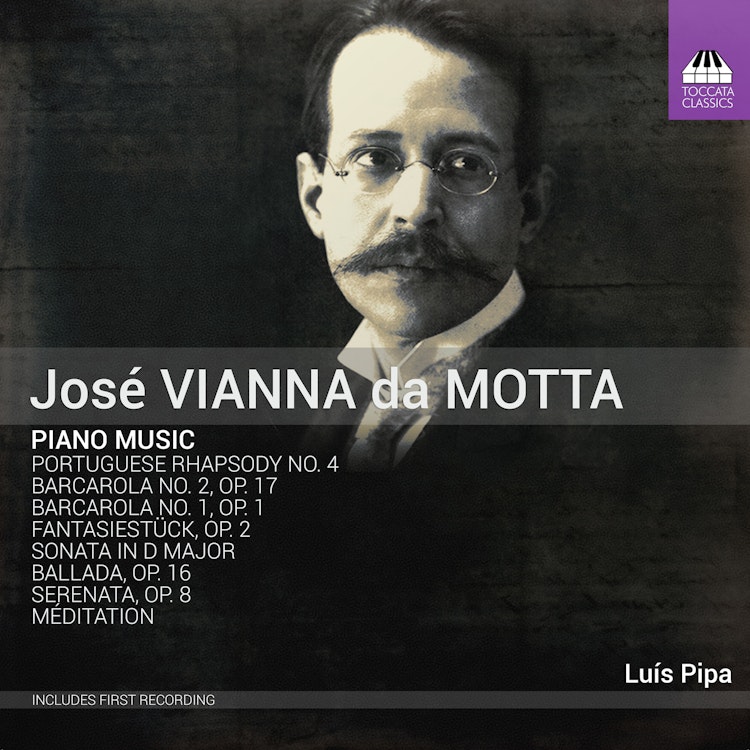
José Vianna da Motta, born in 1868 on the island of São Tomé, was considered the most distinguished Portuguese musician in Europe, if not the world.
Critical Reception
Vianna da Motta's last piano piece, Méditation, written in 1933, reflects his disappointment with peers who found his performing style too cold and calculating, and with the overturning of his Conservatoire reforms.
Composer's Artistic Vision
Vianna da Motta applied innovations from Liszt, Wagner, and Russian nationalist composers to Portuguese cultural themes and folk motifs in his own compositions.
Composer Biography
As director of the Lisbon Conservatoire, Vianna da Motta implemented far-reaching educational reforms and was also conductor of the Lisbon Symphony Orchestra.
Composer Biography
Vianna da Motta was a close friend and collaborator of Ferruccio Busoni, with whom he played two-piano recitals, co-edited Bach's Orgelchoralvorspiele, and shared exile during World War I.
Composer Biography
Vianna da Motta studied at the Lisbon Conservatoire from age seven, then in Berlin on a scholarship from King Fernando II of Portugal, and later attended Franz Liszt's master-classes in Weimar.
Composition History
Vianna da Motta's Symphony A Pátria ('The Fatherland'), inspired by verses of Portugal's national poet Camões, is considered his masterpiece and is approximately 50 minutes long.
You might also enjoy...
Koechlin: Piano Music, Vol. 3
Piano Recital: Lifchitz, Max - Blank, A. / Ziffrin, M. / Stewart, R. / Mason, C.N. / Ovens, D. / Franco, J. / Satie, E. (American Debuts)