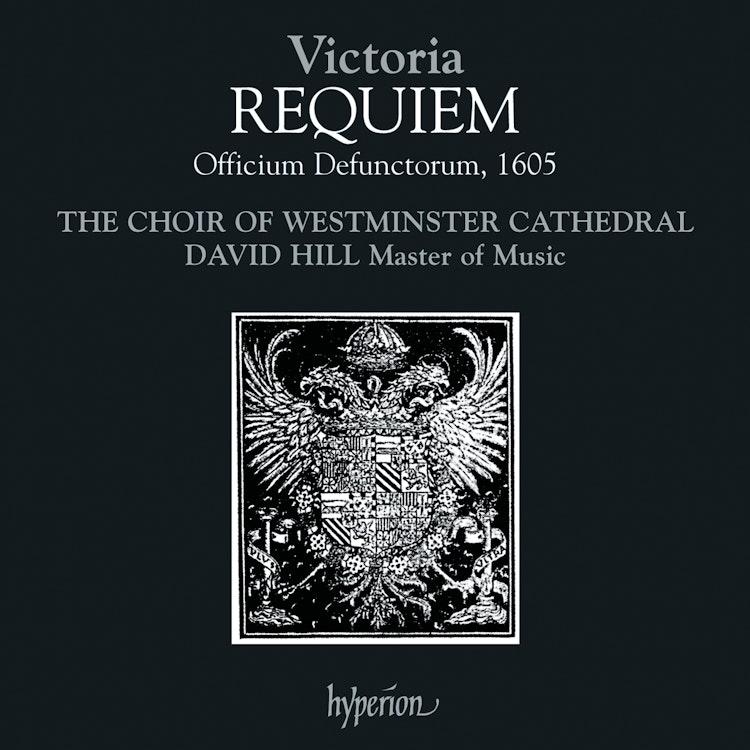
Tomás Luis de Victoria was sent to Rome at age seventeen to study at the Jesuits' Collegium Germanicum, patronized by Philip II and the Church.
Composer Biography
Victoria's musical career in Rome brought him into contact with Palestrina, a renowned Italian Renaissance composer, and other European musicians.
Composer Biography
Tomás Luis de Victoria, a Spanish priest from Avila, spent about twenty years in Rome before returning to Madrid as choirmaster and chaplain to the Dowager Empress Maria.
Compositional Technique
Victoria's Requiem is written for a six-part choir with divided trebles, alto, divided tenors, and bass, incorporating plainsong melodies into the polyphonic texture.
Interpretation
This recording uses sixteenth-century Spanish variants of chants, specifically from Juan Vásquez's Agenda Defunctorum (1556).
Composition History
Tomás Luis de Victoria's Officium Defunctorum, also known as his Requiem, was composed for the memorial service of the Dowager Empress Maria of Austria, sister of Philip II of Spain.
Composition History
The Officium Defunctorum was published in 1605 and is considered by some to be Victoria's last major work, marking the end of Spain's Golden Century and Renaissance music.
You might also enjoy...
Advent Live
Natus: Music for Advent, Christmas & Epiphany
Wie strahlt dein Licht so sternklar
An Enduring Voice
Nowell, Sing We!: Advent & Christmas at New College
Choral Concert: Camerata Musica Limburg - Mendelssohn, Felix / Cornelius, P. / Schubert, F. (Sacred Works for Male Choir)