Coro da Orquestra Sinfônica do Estado de São Paulo
Heitor Villa-Lobos
Did you know?
1/7
Compositional Technique
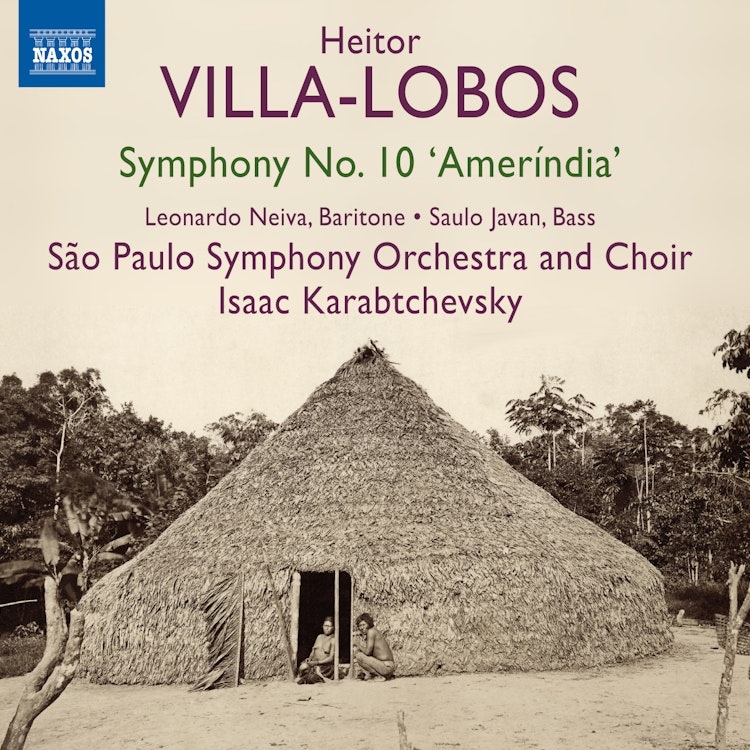
Villa-Lobos's Symphony No. 10 'Ameríndia' is notable for its vast orchestration, including tripled or quadrupled winds and brass, a large percussion section, and significant parts for piano, harps, and organ.
Historical Context
The Jesuit priest José de Anchieta, a founding father of São Paulo, is allegorically linked to the mythological figure Sumé in the symphony, and excerpts from his epic poem are set in the fourth movement.
Compositional Technique
The Symphony No. 10 'Ameríndia' is described as an 'Oratorio for soloists, chorus and orchestra', making it closer in scope to Mahler's Eighth Symphony or Janáček's Glagolitic Mass than a typical choral symphony.
Composition History
Symphony No. 10 'Ameríndia' was commissioned for the 1954 celebration of the 400th anniversary of the founding of São Paulo, Brazil.
Recording & Production
This recording is part of a complete cycle of Villa-Lobos's symphonies, featuring newly revised scores, launched in 2011 by the São Paulo Symphony Orchestra's publishing branch.
Composer's Artistic Vision
Heitor Villa-Lobos, the composer, worshipped J.S. Bach and followed his example to develop a musical idiom that would be both internationally recognized and central to Brazilian musical culture.
Historical Context
The work's subtitle 'Sumé, Father of Fathers' refers to a pre-Columbian mythological figure of the Tamoyo Indian culture, who was believed to have taught agriculture and social organization.
You might also enjoy...
Wilson: Symphonies Nos. 2 & 5
Brian: Symphony No. 6 "Sinfonia Tragica": III. Lento solenne –
Sauguet: Symphonies Nos. 3 and 4
Furtwangler: Symphony No. 1
Hindemith: Symphonia Serena; Symphonie "Die Harmonie der Welt"