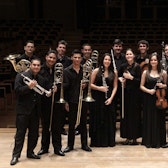
Coro da Orquestra Sinfônica do Estado de São Paulo
Coro Infantil da Orquestra Sinfônica do Estado de São Paulo
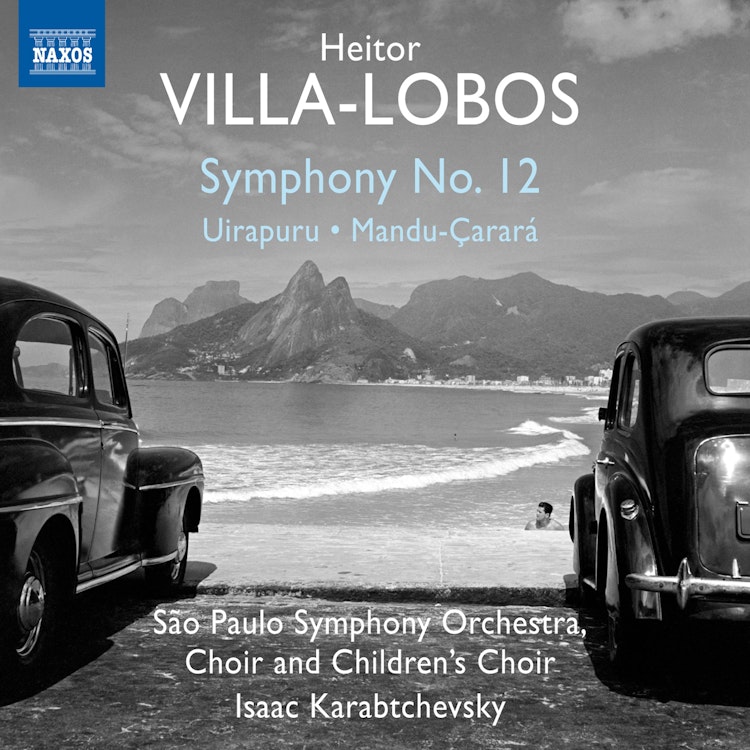
Heitor Villa-Lobos
Did you know?
1/7
Composition History
Uirapuru, one of Villa-Lobos's most frequently performed works, is largely based on his earlier symphonic poem Tédio de Alvorada (Tedium of Dawn) from 1916.
Compositional Technique
Mandu-Çarará, a secular cantata, is notable for Villa-Lobos's contrast between the solemn adult choir representing Curupira (a forest spirit) and the brisk children's choir, using an onomatopoeic Nheengatu text.
Recording & Production
This recording is part of a project to record the complete cycle of Villa-Lobos's symphonies with revised scores, launched in 2011 by the São Paulo Symphony Orchestra's publishing branch.
Composer Biography
Heitor Villa-Lobos completed his final Symphony No. 12 on his 70th birthday in 1957, dedicating it to his companion Mindinha.
Compositional Technique
Villa-Lobos's Symphony No. 12 combines the symphonic craftsmanship of great masters with his typical explosion of energy, unusual harmonic patterns, rhythmic restlessness, and a fondness for free counterpoint.
Cultural Impact
Uirapuru, a ballet based on the mythical Amazonian bird with an extraordinarily melodious song, became a calling card for the modernist Villa-Lobos, especially after being recorded by Leopold Stokowski.
Composer's Artistic Vision
Villa-Lobos's project was to formulate a classical language for Brazilian music, which he pursued through various facets like ballets, Choros, Bachianas Brasileiras, and chamber music.
You might also enjoy...
Dutilleux: Complete Orchestral Works
Dutilleux: Concertos - Orchestral Works
Dutilleux: Orchestral Works
Sumera: Symphony No. 6 / Cello Concerto / Musica Profana
Nordgren: Symphony for Strings; Hate-Love
Maxwell Davies: Symphony No. 6
Dutilleux: Tout un monde lointain - Symphony No. 1 - Métaboles
Vaughan Williams: Symphony No. 5 etc
Dutilleux: Symphony No. 2 "Le double"
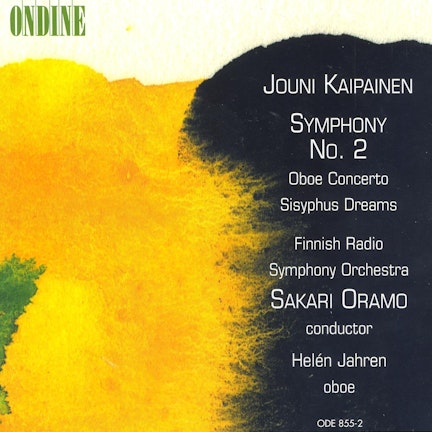
Kaipainen: Symphony No. 2; Concerto for Oboe and Orchestra; Sisyphus Dreams