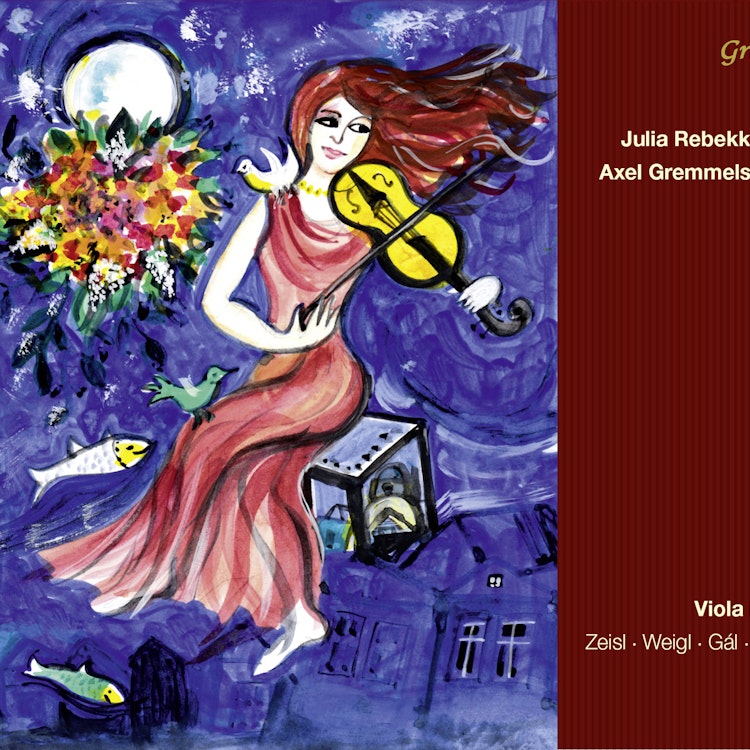
The composers on this album—Hans Gál, Erich Zeisl, Karl Weigl, and Fritz Kreisler—were all Viennese-born and exiled due to their Jewish heritage, first from Germany in 1933 and then from Austria in 1938.
Composer Biography
Erich Zeisl, another composer featured, adopted the Anglicized first name 'Eric' for the public in the USA but remained 'Erich' among his German-speaking friends in California, who included Arnold Schoenberg and Alma Mahler Werfel.
Critical Reception
The forced exile of these composers led to their elimination from concert programs and public awareness, a situation that took decades to begin to rectify through re-appraisal efforts starting in the 1970s.
Composer Biography
Hans Gál, a composer on this album, lost his position as director of the Music Academy in Mainz in 1933 and later found exile in Edinburgh, Scotland, where he became a respected scholar and teacher.
Composer's Artistic Vision
Hans Gál believed that the creative process is rooted in a deep layer of consciousness, untouched by momentary experiences, and that one cannot create a work of art from immediate impressions.
Composition History
Hans Gál's Viola Sonata, Op. 101, was premiered in 1943 at a concert titled 'Music Banned in Germany,' which also featured works by composers like Mendelssohn and Mahler, all outlawed in the Third Reich.
Composer Biography
Fritz Kreisler, a celebrated violin virtuoso, famously claimed that many of his short violin pieces were original works he had discovered by Old Masters like Porpora and Couperin, fooling his contemporaries for a long time.
You might also enjoy...
Schumann, R.: 3 Romanzen / Fantasiestücke / Marchenbilder / Adagio and Allegro
Fanny & Felix Mendelssohn: Chamber Works for Strings
Melodies
Works for Viola & Piano by French Composers
Visages
Voices from the Homefront: American Viola Works from the 1940s
Melanconico
Jerzy Kosmala Live Recordings, Vol. 3
Songs For Viola And Piano
English Music for Viola and Piano
Bela Bartok, Manuel De Falla, Rebecca Clarke, Robert Schumann & Zoltán Kódaly: Märchenbilder - Meisterwerke Für Viola Und Klavier (Fairy Tale Pictures - Masterworks for Viola and Piano)
The Blissful Viola
Music for Viola & Piano by Reinecke, Schumann, Vieuxtemps, Wieniawski, Sibelius and Bridge