Composers of church music in 17th-century Poland were required to create lavish pieces for major Marian feasts, leading to some of their most inspired works.
Historical Context
In predominantly Catholic Poland, devotion to the Blessed Virgin Mary has always been a significant part of religious life, with many Marian shrines still existing today.
Composer's Artistic Vision
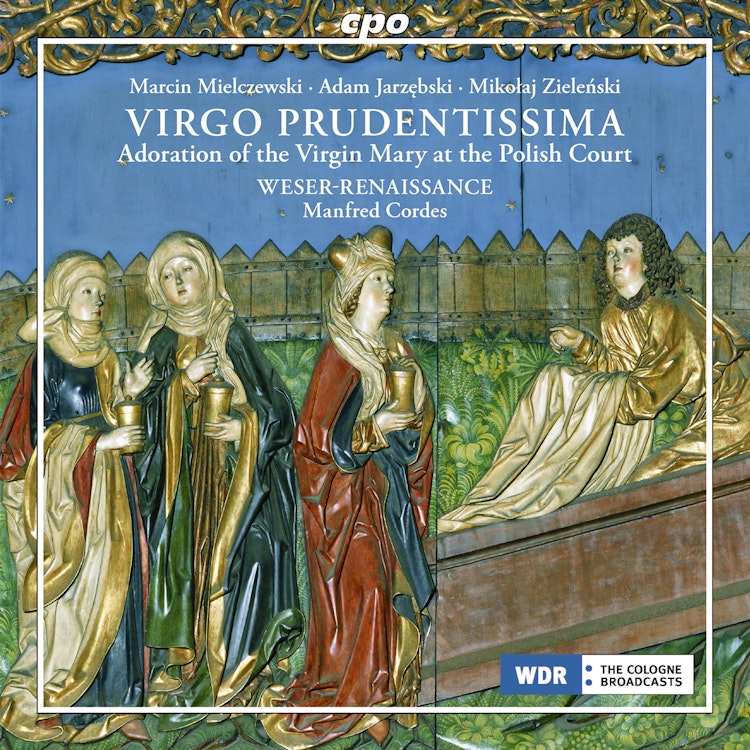
Marcin Mielczewski's "Virgo prudentissima" was clearly influenced by Claudio Monteverdi's famous "Sonata sopra Sancta Maria" from his Marian Vespers of 1610.
Composer Biography
Marcin Mielczewski, a Polish composer, was widely known in Europe, with over 120 of his compositions documented, and evidence suggests his music was even known in Russia.
Compositional Technique
Marcin Mielczewski's piece "Virgo prudentissima" is scored for three contrasting choirs, allowing for kaleidoscopic changes of texture, and includes an extra soprano part singing only the litany text "Sancta Maria, ora pro nobis."
Composer Biography
Adam Jarzębski, a Polish composer and violinist, also served as a royal builder and managed the construction of the royal palace at Ujazdów in Warsaw.
Historical Context
King Sigismund III Vasa moved the Polish court from Krakow to Warsaw at the end of the 16th century, and recruited Italian musicians and a new maestro di capella for his Royal Chapel.