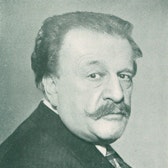
Moriz Rosenthal's Carnaval de Vienne, first composed in 1889, was highly admired by Johann Strauss himself, who had become a close friend of Rosenthal.
Critical Reception
Carl Tausig, a favorite pupil of Liszt, created epoch-making transcriptions that extended the lyrical and dramatic potential of the piano, yet few pianists include his works in their repertoire today.
Composer's Artistic Vision
Leopold Godowsky called his elaborate treatments of Strauss operetta themes "Symphonic Metamorphoses" because of their symphonic texture and dense interplay of harmonic and thematic ideas.
Compositional Technique
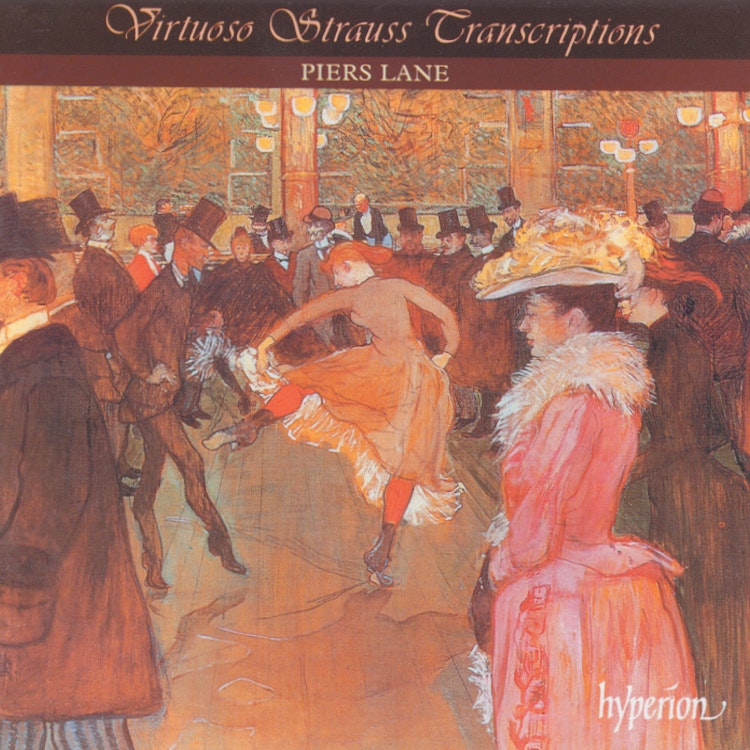
Johann Strauss II composed very little piano music himself, but his waltzes and melodies inspired a wealth of piano literature through transcriptions by other pianists.
Composer's Artistic Vision
The pianist-composers featured on this album aimed to showcase their keyboard skills and provide listeners with an "ear-tickling frisson" by transforming orchestral or vocal music into persuasive piano compositions.
Compositional Technique
Moriz Rosenthal's Fantasy on Johann Strauss combines the opening theme of 'The Blue Danube' with a theme from 'Die Fledermaus' in an ingenious contrapuntal display.
Composer Biography
Andrei Schulz-Evler, a pupil of Carl Tausig and composer of the famous Concert Arabesques on 'The Beautiful Blue Danube', taught at the Kharkov School of Music from 1888 until shortly before his death.