Vivaldi's dances in these sonatas often feature very fast tempos, which made the complex rhythmic patterns and polyphonic techniques found in Bach's suites impossible.
Compositional Technique
While solo sonatas were a new genre in Vivaldi's time, the trio sonata was a venerable form with a century-old tradition, which Vivaldi briefly revisited in his Op. 5.
Compositional Technique
Although trio sonatas have three parts, they ideally require four instruments: two violins for the upper voices, and a cello and harpsichord jointly playing the basso continuo.
Composer's Artistic Vision
Vivaldi's music, particularly his dances, is characterized by enormous motor energy, contrasting with the more intricate French-influenced style of composers like Bach.
Interpretation
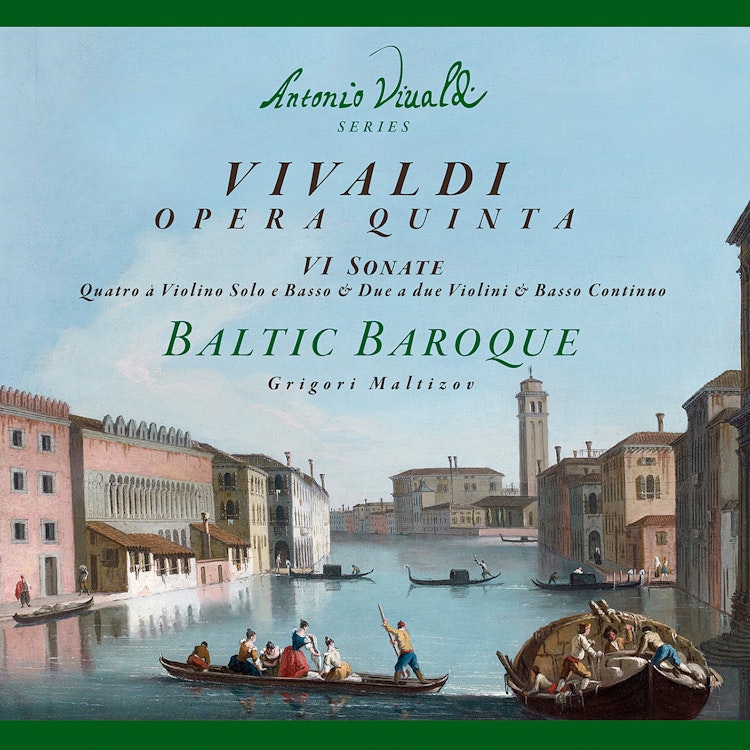
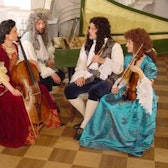
This album is performed by BALTIC BAROQUE on period instruments, ensuring an historically informed interpretation of Vivaldi's sonatas.
Historical Context
The different publishers for Vivaldi's Op. 2 and Op. 5 sonatas (both in Amsterdam in 1716) are linked to the family history of Estienne Roger, a Huguenot who fled France after the Edict of Nantes was revoked.
Composition History
Vivaldi's Op. 5 violin sonatas were published as a continuation of his earlier Op. 2 sonatas, indicated by numbering them 13-18.
You might also enjoy...
Pietro Marchitelli, Trio Sonatas
Klangraum Kloster Maulbronn: Bach Meets Vivaldi (Live)