Fabrizio Cipriani, the violinist on this recording, has won several awards including the Diapason d'oro and the Antonio Vivaldi award, and has performed over 400 concerts as a soloist and chamber musician.
Compositional Technique
The concertos on this album follow the traditional three-movement structure of Allegro-Adagio-Allegro, with solo passages alternating with 'tutti' sections.
Cultural Impact
Vivaldi's experiment of writing concertos for a small number of performers influenced other composers, including J. S. Bach, who attempted to replicate this form in his 'Italian Concerto' for solo harpsichord.
Composer Biography
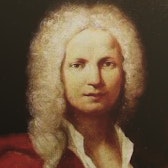
Antonio Vivaldi, born in Venice in 1678 and died in Vienna in 1741, was a "European" musician whose fame extended beyond Italy, with his compositions being transcribed by others, including J. S. Bach.
Composition History
Although these Vivaldi compositions were likely published only after his death, their widespread diffusion is confirmed by the existence of manuscripts, such as those found in Dresden.
Compositional Technique
Vivaldi adapted the classical concerto form, typically for a large ensemble, to a reduced number of performers, essentially creating concertos for soloists without an orchestra.
Recording & Production
The Collegium Pro Musica performs on original instruments, including a recorder made in 1990 after a 17th-century instrument, a 1788 Michele Deconet violin, and an 18th-century Venetian cello.