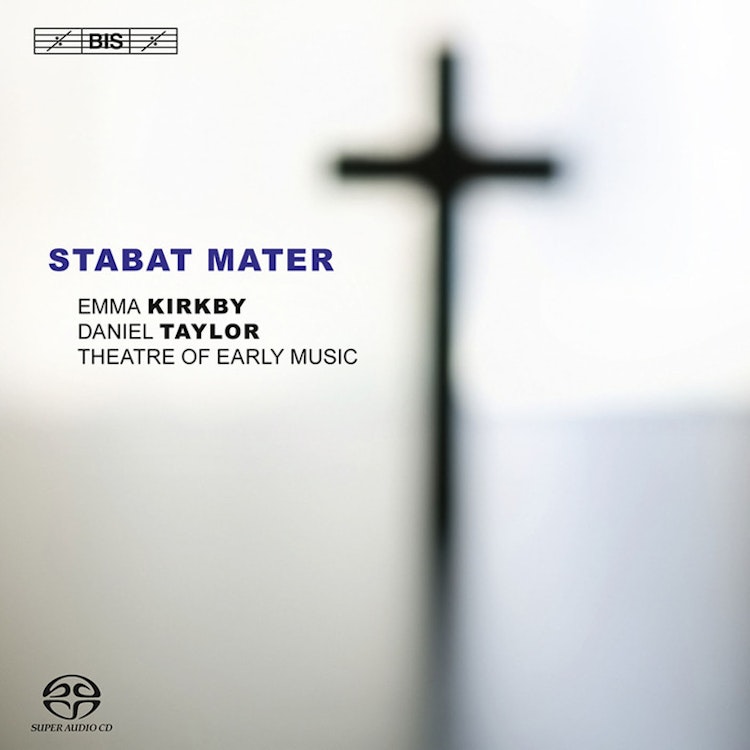
Vivaldi, A.: Stabat Mater / Pergolesi, G.B.: Salve Regina / Bach, J.S.: Tilge, Hochster, Meine Sunden
1/1/2010, 30 Tracks, 1:14:51
Featuring
Daniel Taylor
Dame Emma Kirkby
Theatre of Early Music
Antonio Vivaldi
Giovanni Battista Pergolesi
Johann Sebastian Bach
Did you know?
1/7
Composer Biography
For a long time, Antonio Vivaldi was regarded purely as a composer of instrumental works, with his significant output of sacred music only gaining recognition in the early 20th century.
Compositional Technique
Vivaldi's Stabat Mater is notably sombre, employing an innovative form of eight slow movements followed by an Amen without tempo indication, a structure later used by Haydn and Shostakovich for works on death.
Composition History
Johann Sebastian Bach's adaptation of Pergolesi's Stabat Mater, titled 'Tilge, Höchster, meine Sünden' (Psalm 51), was forgotten for two centuries and only became known in 1946.
Composition History
Pergolesi's Salve Regina was composed in haste at the very end of his life, in 1735-36, while he was at a Franciscan monastery in Pozzuoli, where he died of consumption at age 26.
Composer Biography
Giovanni Battista Pergolesi's brief life led to a relatively copious and primarily vocal legacy, though many instrumental works attributed to him were actually by others.
Compositional Technique
Bach's adaptation of Pergolesi's Stabat Mater is not a mere transcription; he 're-clothed' it with a new German text, altered note values, added melismas, retouched counterpoint, and added an independent instrumental viola line.
Composition History
Vivaldi's Stabat Mater, RV621, one of his earliest surviving sacred works, was rediscovered in 1939 and published in 1949.
You might also enjoy...
Pergolesi Stabat Mater
Grandi: Motetti a due voci: O felix, o lucidissima nox
Vivaldi, A.: Sacred Music, Vol. 2
Vivaldi: Gloria / Scarlatti: Dixit Dominus
Pergolesi: Stabat Mater
Scarlatti: Salve Regina / Pergolesi: Stabat Mater
Vivaldi: Dixit Dominus / Gloria / Nulla in Mundo Pax Sincera
Giordani: Harpsichord Concertos
Vivaldi/Galuppi: Motets
Scarlatti, D.: Stabat Mater / Missa Breve, "La Stella" / Te Deum / Magnificat