Misattributions of authorship were common in the 18th century, making it risky to rely solely on a composer's name on a single manuscript, especially if the musical style suggests otherwise.
Compositional Technique
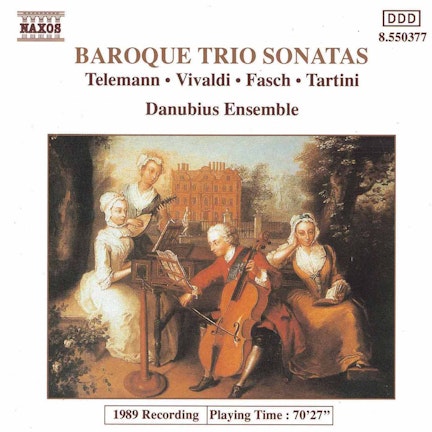
A trio sonata, despite its name, typically involved four performers: two for the upper parts, and two for the bass (a melody instrument like cello and a harmony instrument like harpsichord).
Composer Biography
Vivaldi's 'Manchester' violin sonatas, a group of twelve copied under his supervision, once belonged to Cardinal Pietro Ottoboni, a noted patron of Corelli and Handel in Rome.
Historical Context
The 'violone', the stringed instrument prescribed for the bass in Vivaldi's Op. 1, referred to the cello in its original, slightly larger form suitable for continuo work, rather than the double bass.
Historical Context
Vivaldi's sonatas were considered 'conservative' in their time, following the path laid down by Arcangelo Corelli, a generation earlier, unlike his 'progressive' concertos.
Composition History
Vivaldi's first published collection, Op. 1, titled "Suonate da camera a tre," appeared in 1705, surprisingly acknowledging his clerical status as a priest but not his post as violin teacher at the Pio Ospedale della Pietà.
Composer's Artistic Vision
In Vivaldi's later sonatas, the bass provides a firm harmonic and rhythmic underpinning, while the violin line becomes more elaborate and finely nuanced, sometimes suggesting his concerto writing.