Vivaldi: L’estro armonico, Op. 3 (Transcr. M. Barchi)
6/21/2019, 41 Tracks, 1:47:17
Featuring
Francesco Cerrato
Stefano Cerrato
Marco Demaria
Michele Barchi
Daniele Ferretti
Armoniosa
Antonio Vivaldi
Did you know?
1/7
Historical Context
Vivaldi's music, despite its contemporary admiration, fell into obscurity after his death in 1741, with collections of his manuscripts becoming separated and his work falling out of favor with the rise of early Romanticism.
Interpretation
The ensemble Armoniosa, led by Michele Barchi, has transcribed the entire 'L'Estro Armonico' for their specific instrumentation, including violin, 5-string cello 'piccolo', cello, organ, and harpsichord, to recreate Vivaldi's original orchestral timbres.
Composition History
The publication of Vivaldi's Opus 3, 'L'estro armonico' ('the Harmonic Inspiration'), in 1711 was his international breakthrough, spreading his name and reputation across Europe.
Cultural Impact
Johann Sebastian Bach, a German composer, was greatly impacted by Vivaldi's Opus 3, arranging no fewer than six of its twelve concertos, and later arranging the tenth concerto for four harpsichords and orchestra (BWV 1065).
Critical Reception
Vivaldi's Opus 3 was a revelation, raising the instrumental concerto to a higher plane and making his inventive and expressive touches available to all, significantly influencing his reputation.
Recording & Production
This album was recorded in May 2018 at the Royal Castle of Govone, Italy, and features original instruments with a pitch of 415Hz and unequal temperament.
Composer Biography
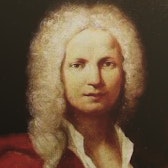
Antonio Vivaldi, an Italian master, composed over five hundred solo concertos for various instruments during his time as music director of the Ospedale della Pietà in Venice.