Vivaldi's modern popularity is unusual because, unlike other Baroque composers, his music's revival has not been accompanied by a general rediscovery of his important Italian contemporaries.
Composer's Artistic Vision
Vivaldi's music, though sometimes simple compared to his Northern European contemporaries, is characterized by violent and colorful contrasts, similar to Venetian art like Commedia dell'arte plays or genre paintings.
Composer Biography
Vivaldi's career as a teacher in a Venetian ospedale (a type of orphanage or hospital) and his strong links with northern Europe led him to compose instrumental music that was exceptional for an Italian composer of his time.
Compositional Technique
Vivaldi uniquely wrote for instruments like the chalumeau, clarinet, bassoon, horn, and viola d'amore, which was uncommon for Italian composers of his era.
Interpretation
This recording uses an organ for the continuo instead of the more common harpsichord, based on evidence that the organ was used more frequently in Vivaldi's instrumental music than previously thought.
Composition History
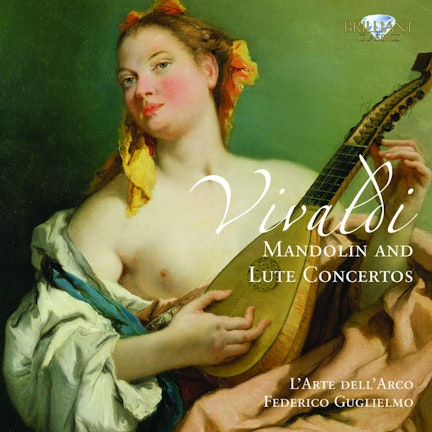
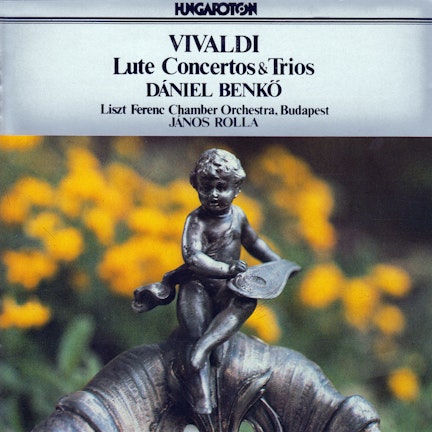
Three of Vivaldi's lute works are dedicated to the Bohemian nobleman Count Johann Joseph von Wrtby, suggesting they might have been intended for the Baroque lute popular in Germany and Austria.
Compositional Technique
Vivaldi's four works for leuto (lute) are written with a largely single-line part in the treble clef, an idiom more akin to mandolin or violin music than the polyphonic texture of Northern European Baroque lute music.