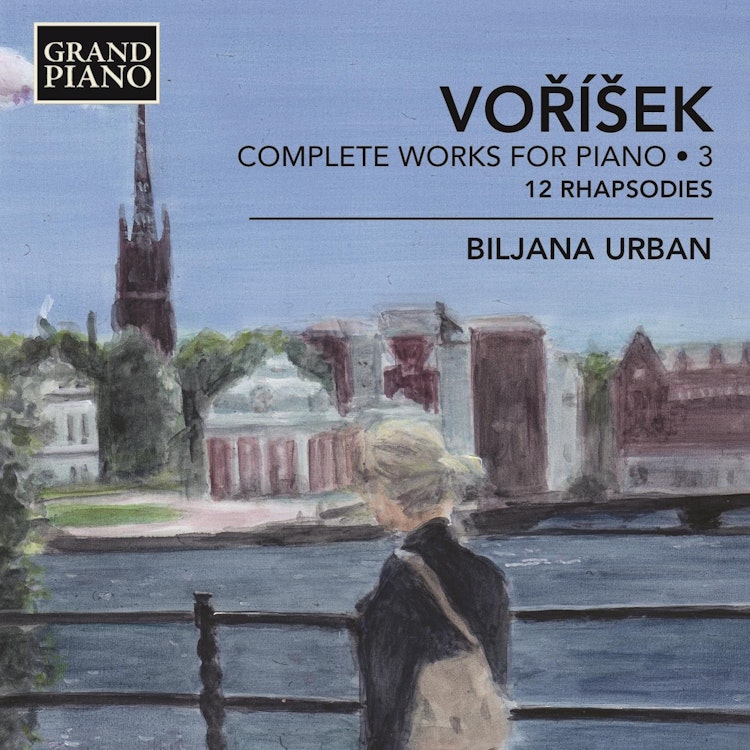
The most striking legacy of Voříšek's Rhapsodies are the Two Rhapsodies, Op. 79 by Johannes Brahms, whose friend Eduard Hanslick was also a student of Tomášek.
Composition History
Beethoven approved of Voříšek's piano compositions, and his influence remained strong on Voříšek's compositional path.
Composer Biography
Jan Václav Voříšek, a Czech composer, organist, conductor, piano virtuoso, and teacher, settled in Vienna at age 22 to meet Beethoven, whom he deeply admired.
Critical Reception
When published in 1818, the Rhapsodies received an excellent review, though the critic noted that the large chords and stretches were challenging for the smaller hands of the 'weaker sex'.
Composition History
The first instrumental rhapsodies were written by Voříšek's teacher, Václav Tomášek, a passionate Hellenist who inspired Voříšek to compose in the same manner.
Compositional Technique
The 12 Rhapsodies, Op. 1, composed mainly in Prague, are large works with a rigorous form similar to a Scherzo, possessing the expressive power of epic poetry.
Composer Biography
Voříšek received a solid musical education from his father, Kaspar Václav Voříšek, learning piano from age three and becoming proficient on organ and violin by age nine.
You might also enjoy...
Czerny: 12 Preludes and Fugues, Op. 400
Beethoven: Symphonie No. 9 (Transcription de F. Kalkbrenner pour solistes, chœur et piano)