The memorable soprano solo in the Agnus Dei of the 'Coronation Mass' clearly anticipates the aria 'Dove sono' from Mozart's later opera, Le nozze di Figaro.
Compositional Technique
The 'Coronation Mass' has a symphonic quality, with Mozart creating variety from limited material and achieving formal coherence, such as the Kyrie theme reappearing in the 'Dona nobis pacem' section.
Compositional Technique
The Missa longa, K. 262, is exceptional for its time due to Mozart's use of a large orchestra, including oboes, trumpets, horns, timpani, and trombones.
Composer Biography
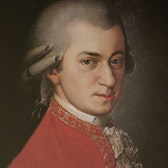
Mozart was deeply unhappy when he wrote the 'Coronation Mass', having been forced to return to Salzburg and work for an archbishop he disliked after unsuccessful attempts to find employment in Paris and Mannheim.
Composition History
Mozart wrote 17 settings of the Ordinary of the Mass in Latin throughout his life, ranging from short missa brevis cycles to more extended works like those on this recording.
Composition History
The 'Coronation Mass' acquired its name in the 19th century, with its first known use at a coronation being for Holy Roman Emperor Franz II in Prague in 1792.
Composer Biography
Mozart's employer, Archbishop Hieronymus von Colloredo of Salzburg, preferred shorter Mass settings, no longer than 30 minutes, which explains the prevalence of Mozart's missa brevis compositions.
You might also enjoy...
Haydn: Nelson Mass
Haydn: Mass in B-flat Major, H. XXII, No. 12 - Theresienmesse/ Theresa Mass
Mozart: Great Mass in C Minor, K. 427 (417a)
Haydn: Mass in C Major, Hob.XXII:9 "Paukenmesse"
Mozart: Mass in C Minor
Haydn : Mass No.11 in D minor, 'Missa in angustiis' [Nelson Mass] & Te Deum
Mozart: Mass in C minor, K. 427 (417a)
Mozart: Missa solemnis K.139 "Waisenhaus-Messe"
Haydn: Harmoniemesse
Mozart: Mass in C Minor, K. 427 "Great" (Reconstr. C. Kemme)