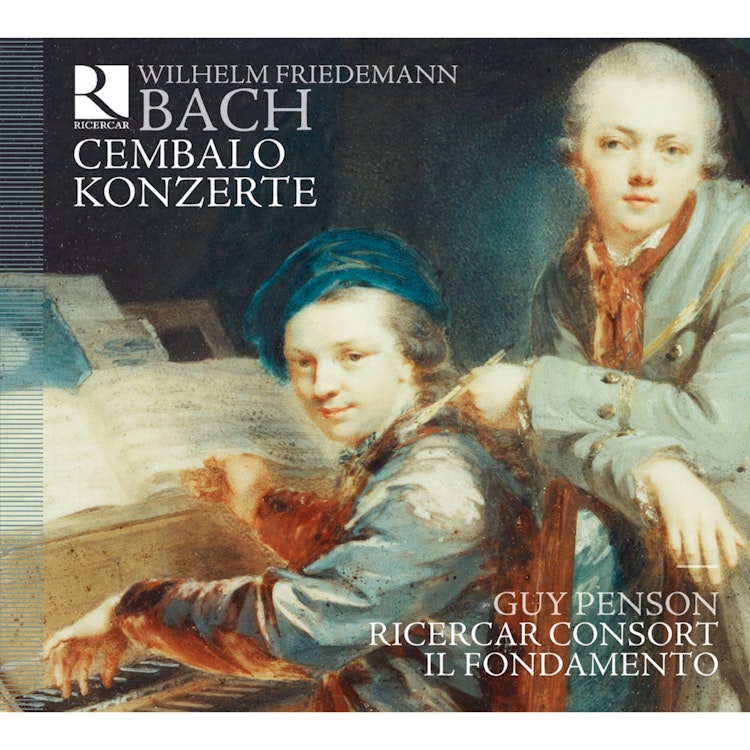
Wilhelm Friedemann Bach, the eldest son of Johann Sebastian Bach, benefited more than his brothers from his father's personality and teaching, as evidenced by the Klavierbüchlein für W.F. Bach.
Critical Reception
Wilhelm Friedemann Bach's keyboard sonatas were considered too adventurous for the public of his time, with their tormented and unstable character making them difficult for amateur performers.
Historical Context
Wilhelm Friedemann Bach's most productive period was in Dresden (1731-1746), a city with a rich musical life, renowned for its Court Orchestra and the presence of opera master Johann Adolf Hasse.
Composer Biography
Wilhelm Friedemann Bach was known for his unstable character and never managed to accept the constraints of a permanent position, dedicating a significant part of his career to teaching and concerts instead.
Cultural Impact
The pianist Julius Epstein, a favorite virtuoso of Johannes Brahms, edited Wilhelm Friedemann Bach's Polonaises, declaring them among the most beautiful pieces in the piano repertoire of all time.
Cultural Impact
Wilhelm Friedemann Bach's music had a lasting impact on later generations; Sarah Levy, Felix Mendelssohn's great-aunt, was his pupil, and Johannes Brahms later organized the publishing of his Concerto for two harpsichords.
Compositional Technique
Wilhelm Friedemann Bach's harpsichord concertos, while influenced by his father's style, show a clear development in expressive power with anguished accents, lyrical phrases, and unexpected cadences.
You might also enjoy...
Carl Philipp Emanuel Bach: Empfindsam
J.S. Bach: French Suites, BWV 812-817
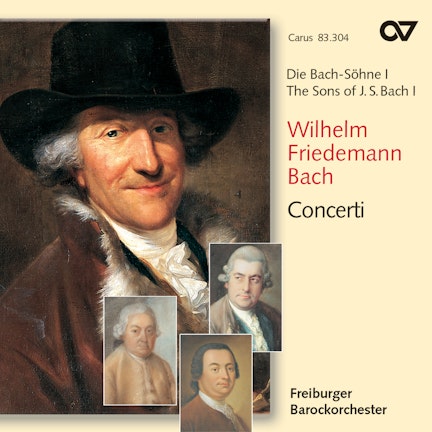
Bach, W.F.: Concerti
Bach, W.F.: Sons of Bach (The), Vol. 1 - Concertos
Total Eclipse: Handel at Home, Vol. 2
Virtuose Baroque Trumpet Music, Vol. II
The All-Baroque Box
Baroque Concerti from The Netherlands
C.P.E. Bach: Symphonies & Concertos
Handel's Attick: Music for Solo Clavichord
Dolce concento: Les Italiens à Paris sous Louis XIV