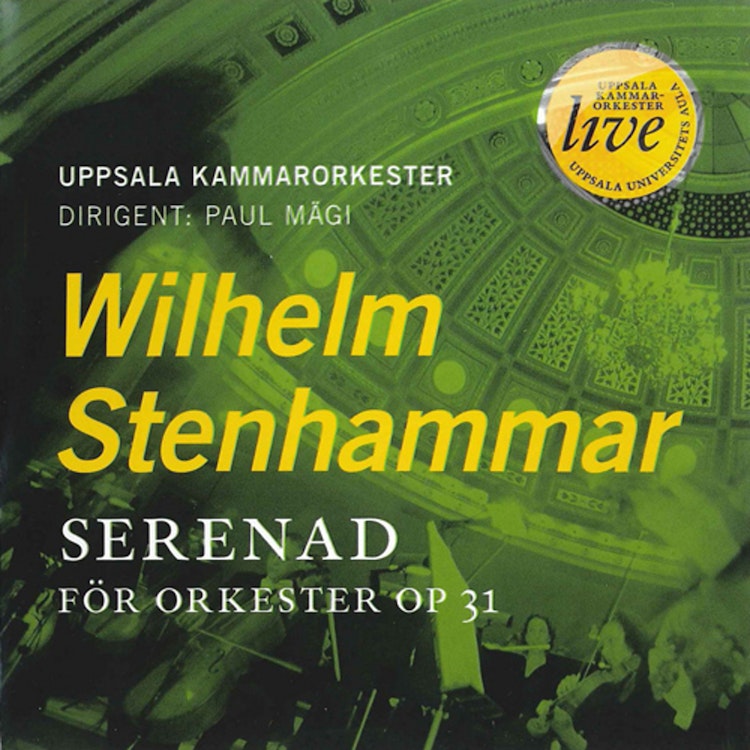
W. STENHAMMAR : Serenade, Op. 31Uppsala- Chamber Orchestra
1/1/2011, 5 Tracks, 38:47
Featuring
Paul Mägi
Uppsala Kammarorkester
Wilhelm Stenhammar
Did you know?
1/7
Compositional Technique
The Serenade for Orchestra, Op. 31, is structured with two outer movements, an Overtura and a Finale, framing three middle movements—Canzonetta, Scherzo, and Notturno—which are played without a break.
Composer Biography
Wilhelm Stenhammar, the composer, visited Florence, Italy, from 1906 to 1907 to escape his routine life and spend more time with his family.
Composition History
Stenhammar's Serenade for Orchestra, Op. 31, was inspired by his time in Florence, though he didn't begin composing it until 1911, several years after his visit.
Composer's Artistic Vision
Stenhammar's Serenade for Orchestra, Op. 31, is a clear celebration of Italy, drawing inspiration from the Commedia dell'Arte tradition with its carnival mischief and varied emotional situations.
Performer Biography
Uppsala Chamber Orchestra, regarded as one of Sweden's finest chamber orchestras, previously received a gold record in 2002 for their recording of Drottningholm Music by Johan Helmich Roman.
Performer Biography
Paul Mägi, the conductor for this recording, is an Estonian conductor who has served as artistic director for prominent orchestras and operas in the Baltic countries, including the Latvian National Orchestra and the Estonian National Opera.
Composition History
The Serenade for Orchestra, Op. 31, was revised after its 1919 premiere, including a key change from E major to F major and the removal of an original movement called 'Reverenza'.
You might also enjoy...
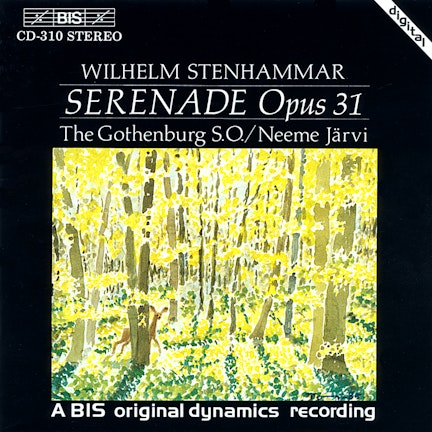
Stenhammar: Serenade, Op. 31
Vaughan Williams: A Sea Symphony
Vaughan Williams: A Sea Symphony
Szymanowski: Symphonies Nos. 2 and 3
Korngold: Much Ado About Nothing & Sinfonietta
Lazarof, H.: Symphonies Nos. 4 and 5
Guerra-Peixe: Symphonies Nos. 1 & 2 "Brasília"
Panufnik: Symphonic Works, Vol. 5
Guarnieri: Symphony No. 5 / Suite Vila Rica / Symphony No. 6