Das Rheingold uses a form of Stabreim, an Old High German alliterative verse, and features leading motifs associated with characters, events, and ideas that recur throughout the drama.
Composition History
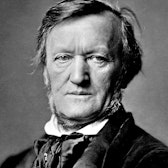
Richard Wagner's tetralogy, Der Ring des Nibelungen, was first performed as a whole in August 1876 at the new Festspielhaus in Bayreuth.
Compositional Technique
The orchestration of Das Rheingold is extensive, including quadruple woodwind, eight horns, four tubas, quadruple trumpets and trombones, six harps (with a seventh on stage), and anvils for the Nibelungs.
Performer Biography
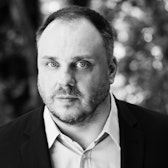
Jaap van Zweden, the Music Director of the Hong Kong Philharmonic Orchestra since 2012, has also conducted the complete Beethoven, Brahms, and Bruckner symphonies for recordings.
Composition History
The complete Ring cycle consists of a Prologue, Das Rheingold, followed by Die Walküre, Siegfried, and the final Götterdämmerung.
Composer's Artistic Vision
Wagner's Ring cycle draws on Icelandic sagas, the 13th-century German Das Nibelungenlied, and the Old Norse Thidreks Saga af Bern, with the structure and theme of the curse owing a debt to Aeschylus and Greek tragedy.
Recording & Production
This recording is part of the first-ever performances by a Hong Kong or mainland Chinese orchestra of Wagner's four-opera cycle The Ring of the Nibelung.