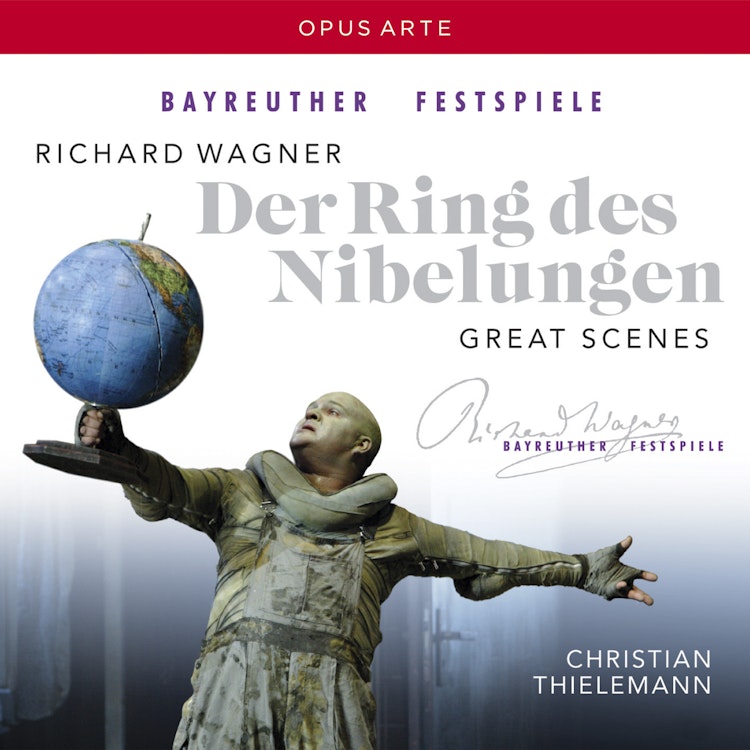
The character Alberich, a despised dwarf, forswears love for power, leading to the creation of Nibelheim, a 'factory-complex of heartless modernity' that challenges the gods.
Composition History
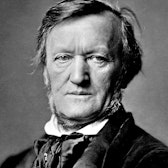
Richard Wagner began working on his opera cycle, Der Ring des Nibelungen, in 1848, but it took over two decades to complete, finishing in 1874.
Composer's Artistic Vision
Wagner aimed to bring revolution to the theatre and theatre to the revolution, expecting what he termed the 'emotionalisation of the intellect' from his audience.
Recording & Production
This recording of Richard Wagner's Der Ring des Nibelungen was made live at the Bayreuth Festival in July and August 2008, in collaboration with Bayerischer Rundfunk.
Composer's Artistic Vision
Wagner's vision for the Ring cycle was influenced by the socialist thought and revolutionary ideals of Pierre-Joseph Proudhon and Mikhail Bakunin, aiming to destroy the world of his present.
Compositional Technique
Siegmund and Sieglinde's incestuous union, defying bourgeois morality, is presented by Wagner as natural, leading to the birth of Siegfried, who awakens Brünnhilde.
Historical Context
The Ring cycle reflects the fervent hopes for revolution and the disillusionment following the European uprisings of 1848-49, in which Wagner himself participated and was exiled for.