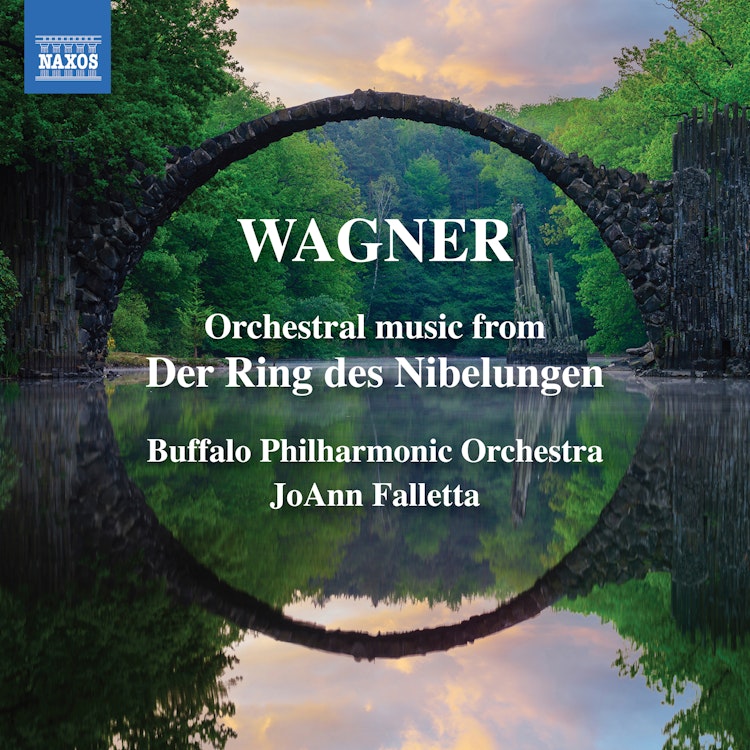
Wagner: Orchestral Music from Der Ring des Nibelungen
3/9/2018, 7 Tracks, 1:04:03
Featuring
JoAnn Falletta
Buffalo Philharmonic Orchestra
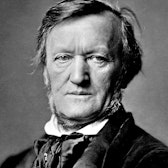
Richard Wagner
Did you know?
1/7
Composition History
Wagner wrote the four libretti for The Ring in reverse order, starting in 1848, but composed the music according to the storyline, completing it 26 years later in 1874.
Compositional Technique
Wagner designed the Festspielhaus opera theatre in Bayreuth with a special recessed orchestra pit, where brass are at lower levels, woodwinds at the center, and strings on top, and the orchestra is covered from view.
Composer's Artistic Vision
The essential meaning of Wagner's Der Ring des Nibelungen is the altruistic power of love, alongside the folly of greed and lust for power.
Instruments
Wagner embellished standard instrumentation by including the Wagner tuba, devised by Adolphe Sax (inventor of the saxophone), and noted Sax's improvements to the bass clarinet, which he used in The Ring.
Compositional Technique
Wagner famously claimed to write 'music of the future' and used Leitmotifs, which are small tuneful fragments, as thematic signatures for characters and events in his operas.
Critical Reception
By the mid-20th century, more books and journal essays had been written about Richard Wagner than any other individual in secular world history.
Composer Biography
Richard Wagner was not a child prodigy like Mozart or Chopin, but by his early teens, he was already certain of his future greatness and began writing his autobiography.
You might also enjoy...
Wagner, R.: Ring (Der) (Orchestral Highlights)
Szell Conducts Wagner: Great Orchestral Highlights from the Ring of the Nibelungs
Symphony At The Opera - Great Opera Interludes
Strauss: Alpine Symphony, Die Frau ohne Schatten & Dance of the Seven Veils
Wolf-Ferrari: Intermezzi, Overtures & Serenade for String Orchestra in E-Flat Major
Grzegorz Nowak Conducts Mussorgsky
Mussorgsky, M.: Pictures at an Exhibition / A Night On the Bare Mountain / Khovanshchina (Excerpts)
Wagner: Der Ring des Nibelungen - Orchestral Music
Wagner: Highlights from Operas
Wagner: Works for Orchestra
Wagner: Orchestral Music from "Der Ring des Nibelungen"
Wagner - Highlights from "The Ring"
Delius: Violin Concerto / Opera Intermezzi / Pieces for Small Orchestra