Hedwig Fassbender, who sings Isolde on this recording, initially trained as a pianist before studying voice and undertaking major mezzo-soprano and dramatic soprano roles.
Compositional Technique
Tristan und Isolde is considered harmonically daring and overtly sensual, known for its chromatic harmonies, including the famous 'Tristan chord' in the Prelude.
Composition History
Wagner's opera Tristan und Isolde reflects aspects of his own life, particularly his liaison with Mathilde Wesendonck, the wife of his benefactor Otto Wesendonck, while exiled in Switzerland.
Composer Biography
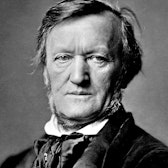
Richard Wagner, the composer, was born in Leipzig in 1813 and was possibly fathered by the actor Ludwig Geyer, who married Wagner's mother after her husband's death.
Compositional Technique
The score of Tristan und Isolde makes use of leitmotifs, which are musical phrases or figures associated with elements of the drama, often more abstract than in earlier works.
Composer's Artistic Vision
Wagner was driven by an aggressive urge to create a new form of music, 'the music of the future,' particularly through the conjunction of all arts in great music dramas.
Historical Context
The Royal Swedish Opera Orchestra, known as Kungliga Hovkapellet, traces its origins to a 16th-century Court Chapel and is one of the world's oldest orchestras.