Richard Wagner's "Tristan und Isolde" features the famous 'Tristan' chord, which was harmonically unprecedented at the time, creating tension and avoiding clear resolution.
Recording & Production
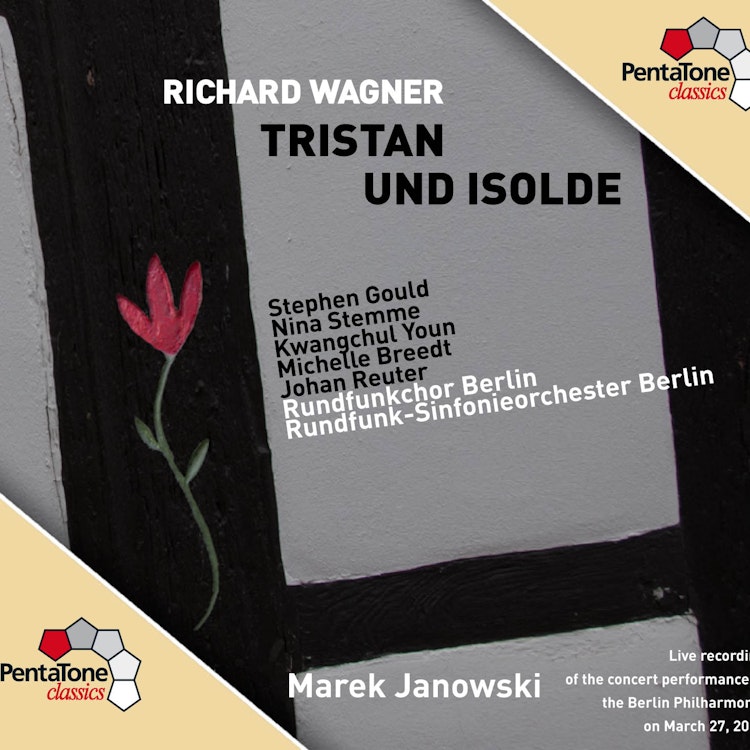
This recording of Richard Wagner's "Tristan und Isolde" is a live recording of a concert performance from March 27, 2012, in the Berlin Philharmonie.
Composer's Artistic Vision
Wagner titled "Tristan und Isolde" simply 'Handlung' (action, plot) because he considered it an 'inner action' rather than a traditional drama or opera with external conflicts.
Composition History
Richard Wagner interrupted his work on "Siegfried," part of his life's work "Der Ring des Nibelungen," in 1857 to compose "Tristan und Isolde."
Composition History
The premiere of "Tristan und Isolde" was delayed due to the extreme difficulty of the opera score, finally taking place on June 10, 1865, in Munich with the support of King Ludwig II.
Composer's Artistic Vision
Wagner's intention in "Tristan und Isolde" was to avoid anything leading to a goal or resolution in all musical parameters, portraying the uninhibited expression of erotic desire.