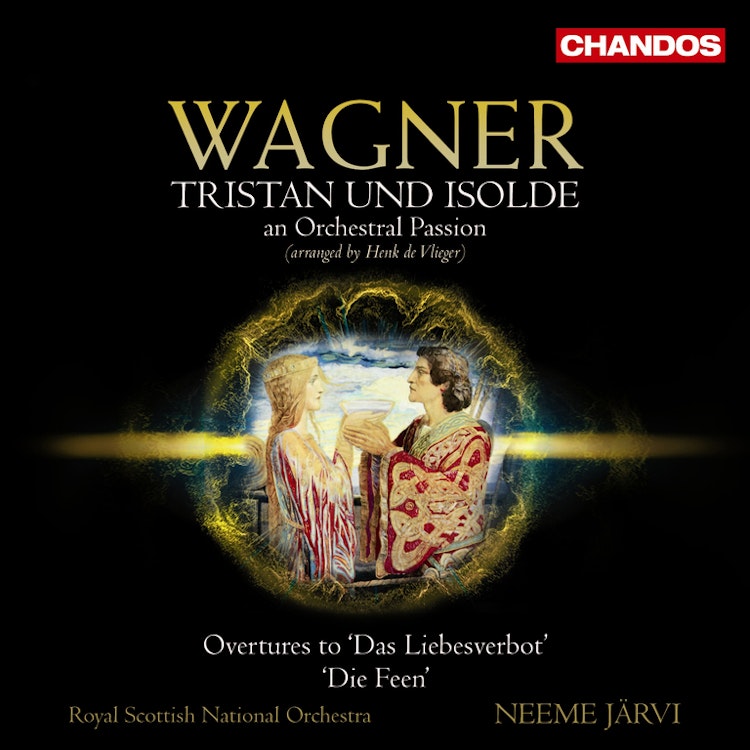
Neeme Järvi, the conductor on this album, has an extensive discography of over 440 discs, with more than 150 recorded for Chandos.
Composer's Artistic Vision
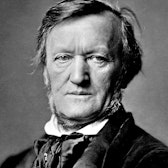
Richard Wagner's works are considered 'music dramas' where music, not text, holds absolute primacy, reflecting complex mental states through the orchestra.
Composer's Artistic Vision
For Richard Wagner, the orchestra in his music dramas symbolizes the subconscious, while the sung parts represent the characters' consciousness.
Compositional Technique
Richard Wagner's early opera 'Das Liebesverbot' (1834-36), based on Shakespeare's 'Measure for Measure', features castanets, triangle, and tambourine in its overture, giving it a 'southern-sounding' character.
Composition History
Richard Wagner himself initiated the practice of creating symphonic arrangements from his music dramas in 1859, with his arrangement of the orchestral prelude and final scene of 'Tristan und Isolde'.
Compositional Technique
Richard Wagner preferred to title the concert version of the 'Tristan und Isolde' prelude and final scene as 'Liebestod und Verklärung' ('Love death and Transfiguration'), emphasizing death in the prelude and transfiguration in the final scene.
Composition History
Henk de Vlieger's 1994 arrangement of 'Tristan und Isolde, an orchestral passion' was inspired by Arnold Schoenberg's symphonic poem 'Pelleas und Melisande'.
You might also enjoy...
Wagner: Parsifal, Der Fliegende Holländer, Die Meistersinger, & Tristan und Isolde
Mythos Wagner
Great Wagner Conductors
Wagner: Overtures and Preludes
Wagner: Preludes and Interludes
Meyerbeer: Overtures & Stage Music
Wagner - Oeuvres Orchestrales
Ultimate Classics - Wagner: Orchestral Works
Brahms: Serenade No. 1, Tragic Overture & Academic Festival Overture
Wagner: Prelude & Liebestod from Tristan und Isolde, Prelude & Good Friday Music from Parsifal