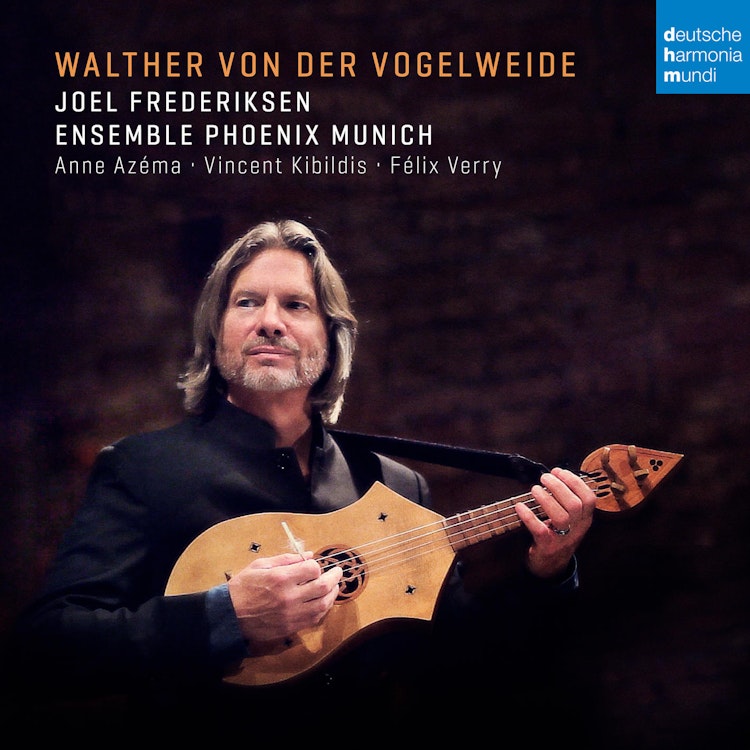
Minnesang, the tradition Walther von der Vogelweide was part of, is primarily preserved in text collections, such as the Codex Manesse, which often lack corresponding melodies.
Interpretation
The instruments used for this recording, including a citole, Romanesque harp, and fiddles, are replicas of those seen in medieval art, chosen because a harp and fiddle could have been played by Walther von der Vogelweide himself.
Compositional Technique
Adiastematic neumes, found in manuscripts like the Codex Buranus from around 1225/30 when Walther von der Vogelweide was alive, provide rough information about melodic contours but are not precisely decipherable.
Historical Context
Walther von der Vogelweide's legacy endured for centuries, as he was held in high esteem as one of the 'Twelve Old Masters' by the Meistersingers 400 years after his death.
Compositional Technique
One method for recovering melodies for Walther von der Vogelweide's texts involves searching for 'contrafacts'—French trouvère and Occitan troubadour songs that may have served as models for German minnesingers.
Composer's Artistic Vision
Walther von der Vogelweide's art is considered a performance art, with the belief that singing and playing his texts brings listeners closer to their powerful and profound meaning than merely reading them.
Compositional Technique
Except for the famous 'Palästinalied', there is virtually no fully preserved melody by Walther von der Vogelweide, making the recovery of his melodies a significant challenge.
You might also enjoy...
Così amor mi fa languire
Wolkenstein: "Songs of Myself"
Charpentier : Divertissements, Airs & Concerts
Orpheus' Echo - A Carolignian Soundscape
Mein traut gesell: Secular Songs of the Late Minnesang
Ich saz ûf einem steine (Arr. by Marc Lewon)
Intersections
October Skies - Songs for Tenor, Violin, Cello and Percussion
Mönch von Salzburg: 14th Century Lieder
De la cour de Louis XIV à Shippagan! Chants traditionnels acadiens et airs de cour du XVIIe siècle