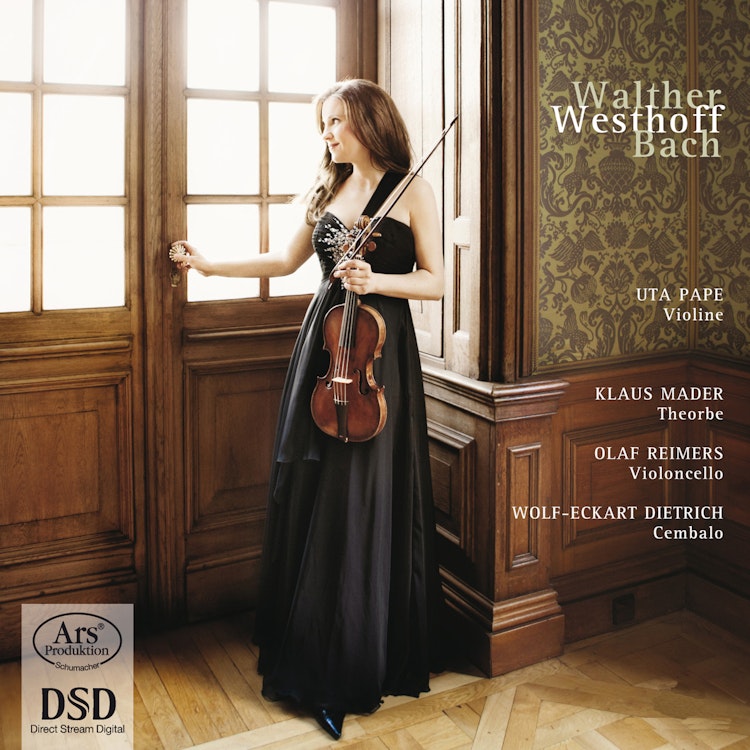
Heinrich Ignaz Franz Biber, Johann Jacob Walther, and Johann Paul von Westhoff were known as the 'Big Three' German violinists in their time, frequently mentioned when discussing German violin playing.
Historical Context
The 17th century was a crucial period for the development of violin playing and technique, laying the foundation for all modern violin technique within just 80 years.
Composer's Artistic Vision
Johann Jacob Walther, often called 'the Paganini of his time,' combined existing technical achievements and greatly expanded violin virtuosity in his compositions, a level unsurpassed until J.S. Bach.
Historical Context
At the beginning of the 17th century, the violin was considered a 'common' instrument for the lower classes and was shunned by serious musicians, unlike the 'noble' bass viol.
Historical Context
The violin became socially acceptable around 1600, not primarily due to its sound, but because the absence of frets and improved bowing technique allowed for greater sound differentiation.
Compositional Technique
Walther's Hortulus Chelicus, a collection of 28 pieces for violin and basso continuo, served as a teaching tool with pieces of varying difficulty, living up to its title 'Well-planted Violinistic Pleasure-Garden'.
Compositional Technique
Johann Paul von Westhoff's Six Suites for solo violin, published in 1696, are notable for their unique notation using systems with eight-line staves.