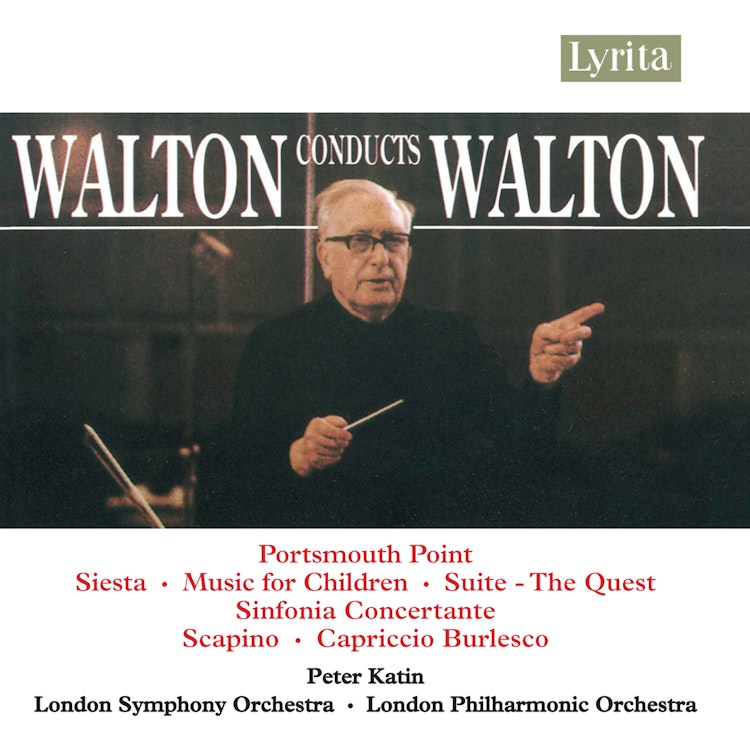
The ballet 'The Quest' was composed by Walton in about five weeks during World War II for a patriotic ballet, with the score sent to choreographer Frederick Ashton a few pages at a time.
Composition History
Walton's first successful orchestral work, 'Portsmouth Point', was based on an etching by artist Thomas Rowlandson and was selected for performance at the 1926 International Society for Contemporary Music festival in Zurich.
Composition History
'Capriccio Burlesco' was one of 18 works commissioned by the New York Philharmonic for its 125th anniversary in 1968.
Composer's Artistic Vision
Walton's musical character is described as having a 'nervy, restless yet rhythmically exuberant' side, alongside a 'lyrical vein of melancholy' often called 'bitter-sweet'.
Composition History
Walton originally wrote 'Music for Children' as nine piano solos called 'Tunes for My Niece' for his brother's daughter Elizabeth, later rearranging them as duets and then orchestrating them.
Composition History
Walton's 'Sinfonia Concertante' was originally conceived as a ballet score for Diaghilev, but after the impresario disliked it, Walton reversed the process and turned it into a concert piece for piano and orchestra.
Composer Biography
Sir William Walton, the composer, came from a lower middle-class background and was discovered by the Sitwells, a prominent artistic family, who introduced him to London's artistic and social circles.
You might also enjoy...
MIKLÓS RÓZSA: Orchestral Works
Antheil: Orchestral Works, Vol. 3
Ten Years of Musica Italiana
Thomas Schippers Conducts Barber/Menotti/Berg/D'Indy
Classics at the Pops
Wood: Paris Suite / A May-Day Overture
Wood: Paris Suite / A May-Day Overture
Classic Choice
Classic Choice
One Century of Music: Premier siècle (Live)
Modern Times - Classical Discoveries
Orchestral Music (Finnish) - Klami, U. / Palmgren, S. / Kajanus, R. / Kuula, T. / Sibelius, J. (Pictures From Finland)