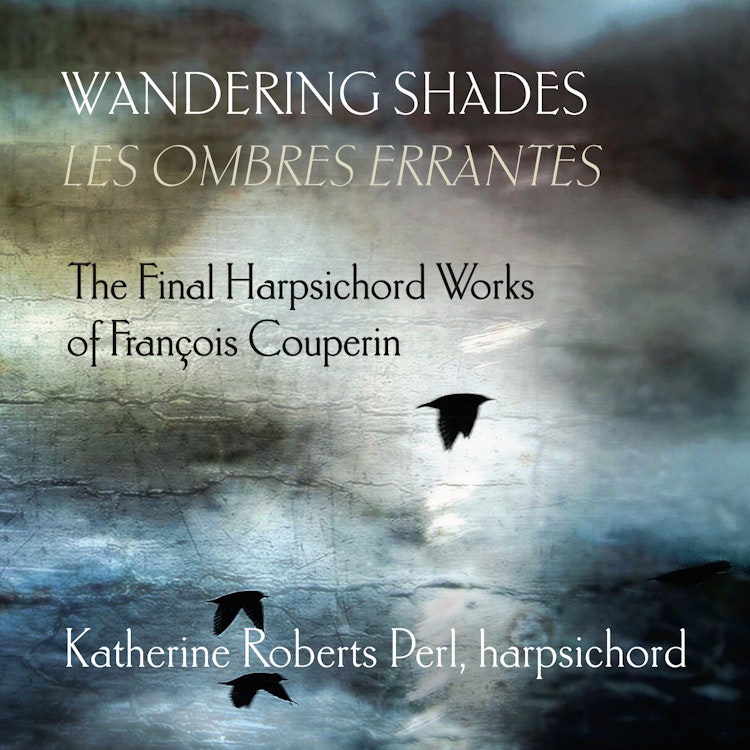
Wandering Shades: The Final Harpsichord Works by François Couperin
9/9/2014, 22 Tracks, 1:18:47
Featuring
Katherine Roberts Perl
François Couperin
Did you know?
1/7
Interpretation
The performer, Katherine Roberts Perl, changed the plectra material in her harpsichord to bird feather quills, similar to what Couperin would have used, to achieve a more authentic sound.
Compositional Technique
Couperin organized his harpsichord pieces into groups called 'Ordres' rather than the more common 'Suites', containing traditional dances and descriptive pieces.
Cultural Impact
Both Debussy and Ravel explored Couperin's music, with Ravel composing 'Le Tombeau de Couperin' as an homage to 18th-century French music.
Composer Biography
François Couperin, born into a Parisian musical dynasty in 1668, was the most famous and prolific harpsichordist of the French Baroque, earning the title 'Le Grand'.
Composer's Artistic Vision
Couperin's final four 'Ordres' reflect a transition in his life, with his compositional language becoming darker, more dreamy, reflective, and serious due to his failing health.
Cultural Impact
Richard Strauss arranged some of Couperin's keyboard pieces for small orchestra, creating divertimenti for a ballet that premiered in 1923.
Composition History
Couperin's 'Pieces de Clavecin' is an immense collection of over 240 keyboard pieces, organized into four books published between 1713 and 1730.
You might also enjoy...
De Macque: The Keyboard School at Gesualdo's Court
Nares: Eight Setts of Lessons for the Harpsichord - Handel: Suite in D Minor
Couperin, F.: Pieces De Clavecin, Book 4
Graupner: Partitas for Harpsichord Vol.1
Graupner: Partien 1718 & Galanteries: Partitas for Harpsichord, Vol.2
Cavazzoni: Complete Works – Italian Ricercars
Le clavecin moderne: New Polish Music for the Harpsichord Solo
Il cembalo transalpino
Couperin: Pieces de clavecin, Vol. 1
Frescobaldi, G.: Affetti cantabile
Couperin: Deuxième livre de pièces de clavecin, Ordre 8
Coelho: Flores de Musica pera o Instrumento de Tecla, & Harpa, Vol. 4
Froberger 1649: Suites, Fantasia and a Lament
Soler: Sol de mi fortuna, Sonatas from the Morgan Library