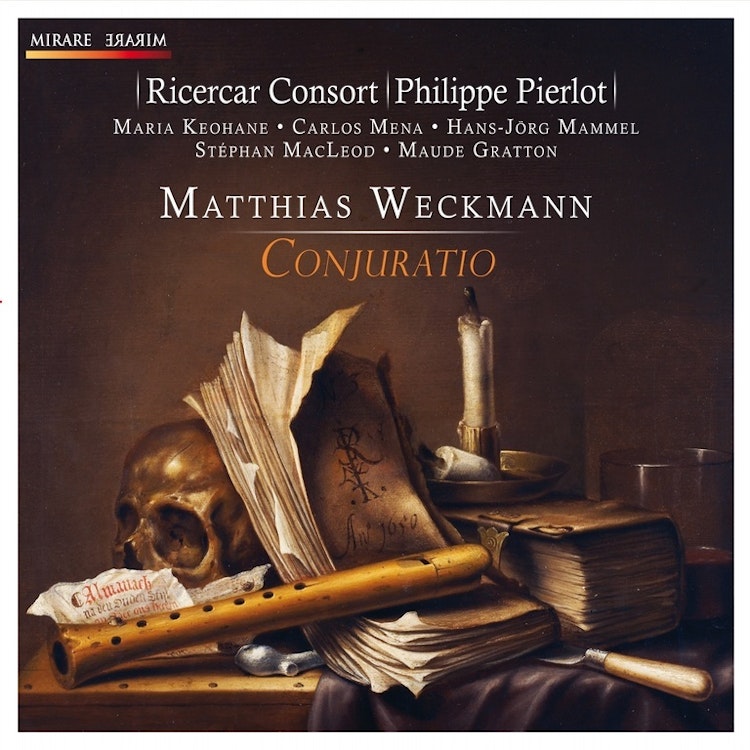
This album was recorded in two different locations: the Abbey of Saint-Amant-de-Boixe in September 2012 and the Church of St Nicolas and St Martin in Steinkirchen in December 2012.
Historical Context
The plague epidemic of 1663 severely impacted Hamburg, causing public life to cease and leading to the deaths of many, including prominent musicians like Thomas Selle and Heinrich Scheidemann.
Composition History
During the 1663 plague, Matthias Weckmann composed the motet In te Domine speravi, intending it for his own funeral, though he survived the plague and it was performed ten years later at his actual obsequies.
Composition History
Several of Weckmann's works on this album, including Zion spricht, Herr, wenn ich nur dich habe, and Wie liegt die Stadt so wüste, were composed in 1663 as a direct reaction to the humanitarian catastrophe of the plague.
Composer Biography
Matthias Weckmann, while known as a major composer of Protestant church music, was primarily an organist and a leading representative of the north German organ school.
Instruments
The organ used for some tracks on this album in Steinkirchen was built by Arp Schnitger in 1687 and retains many original 16th-century pipes, having undergone minimal alterations over centuries.
Composer Biography
Matthias Weckmann, the composer, was trained by Heinrich Schütz, Johann Klemm (organ), and Caspar Kittel (singing) in the Saxon court chapel.
You might also enjoy...
X Festival de Chiquitos Vol 1
Stradella & Gregori: Sinfonias & Concerti grossi
Music from the Peterhouse Partbooks, Vol. 3
Come to My Garden - German Early Baroque Lovesongs
Come to My Garden - German Early Baroque Lovesongs