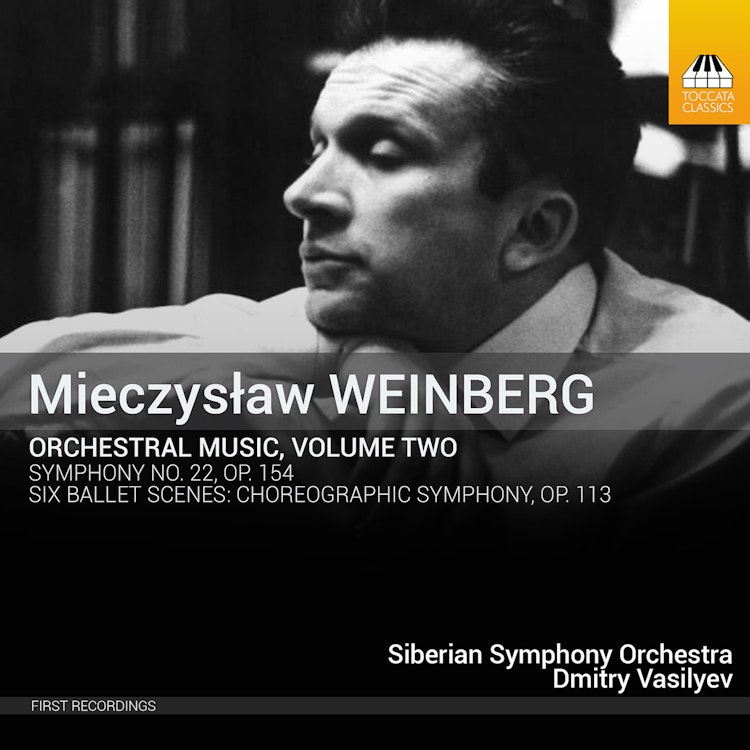
The Six Ballet Scenes combines orchestral transcriptions from an earlier ballet with improvisatory passages that incorporate innovative techniques like twelve-note clusters and morse-code rhythmic patterns.
Historical Context
Weinberg's ballet, The White Chrysanthemum, was never performed, possibly due to the Soviet Union's problematic relations with Japan at the time.
Recording & Production
This recording features the world premiere of Mieczysław Weinberg's 22nd Symphony, which was orchestrated by Kirill Umansky after the composer's death.
Composition History
The Six Ballet Scenes, Op. 113, by Mieczysław Weinberg, is based on transcriptions from his never-performed 1958 ballet, The White Chrysanthemum, which told the story of a Japanese girl blinded by the atom bomb at Hiroshima.
Composer Biography
Mieczysław Weinberg, the composer of the orchestral music on this album, was at the height of his powers around his 50th birthday in 1969, focusing primarily on opera.
Interpretation
Kirill Umansky, who orchestrated Weinberg's 22nd Symphony for this recording, studied half of Weinberg's other symphonies to immerse himself in the composer's style before undertaking the task.
Composer Biography
Mieczysław Weinberg's final years were marked by declining health and reputation, and he completed his 22nd Symphony, his last composition, in piano score but was too ill to orchestrate it.
You might also enjoy...
Kancheli: Symphonies Nos. 4, 5
Børresen: Symphonies Nos. 2 & 3
Natanael Berg: Symphony No. 4 · Symphony Trilogia
Evgeny Mravinsky, conductor: Honegger - Symphony No. 3 "Liturgique" / Hindemith - Die Harmonie der Welt Symphony