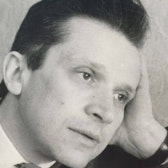
Mieczysław Weinberg, though spending most of his life in the Soviet Union, always considered himself a Pole, having been born in Warsaw in 1919.
Composer's Artistic Vision
Weinberg consciously incorporated folk music from Russian, Polish, and Jewish traditions into his compositions, aligning with Soviet authorities' demands for accessible art.
Composer Biography
Weinberg's plans for a brilliant piano career, including studies at the prestigious Curtis Institute of Music in Philadelphia, were thwarted by the outbreak of World War II.
Historical Context
In 1953, Weinberg was imprisoned in Lubianka, accused of Jewish nationalism and involvement in a plot to establish a Jewish republic in Crimea, charges that seem absurd from today's perspective.
Composer Biography
Dmitri Shostakovich, a prominent Soviet composer, played a crucial role in Weinberg's life, helping him move to Moscow and later intervening for his release from prison.
Compositional Technique
Weinberg's music, while based on traditional tonal systems and classical forms, is intricate and complicated, often featuring extensive polyphony and instruments rarely serving solely as accompaniment.
Historical Context
The Holocaust left a deep wound on Weinberg, as his parents and sister were murdered in the Trawniki concentration camp, making him question his own survival.
You might also enjoy...
Béla Bartók / Alfred Schnittke / Witold Lutosławski
Szymanowski/Britten/Grieg: Violin Sonatas
Bacewicz: Violin Sonata No. 4 - Beach: Violin Sonata in A minor, Op. 34
Porträt-Reihe: XX / XXI
La Recherche
Rêverie (The Royal Academy of Music Bicentenary Series)