Weinberg had to flee Warsaw in 1939 due to the Nazi invasion and later fled Minsk in 1941 when the Nazis invaded the Soviet Union, eventually settling in Tashkent.
Compositional Technique
The finale of Weinberg's Seventh Symphony uses a variety of special instrumental effects, including harmonics, glissandi, col legno (bowing with the wood), and knocking on the double-bass body.
Compositional Technique
The third movement of Weinberg's Seventh Symphony features strange chromatic shifts and Jewish intonations, reminiscent of Mahler and Shostakovich.
Composition History
Weinberg's First Symphony was sent to Dmitri Shostakovich, whose approval led to Weinberg being able to settle in Moscow from mid-1943.
Compositional Technique
Weinberg's Seventh Symphony, composed in 1964, is written for harpsichord and string orchestra, using a baroque concerto grosso model.
Composition History
Mieczysław Weinberg, the composer, dedicated his First Symphony to the Red Army, which was fighting the aggressors ravaging his homeland and adoptive country at the time of composition.
Performer Biography
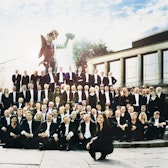
The Gothenburg Symphony Orchestra, founded in 1905, was appointed The National Orchestra of Sweden in 1997 and has toured internationally.