Švanda dudák had its American premiere at the Metropolitan Opera in 1931 and its Covent Garden premiere in 1934, both using Max Brod's German version.
Composer's Artistic Vision
The central figure of the bagpiper, Švanda, in Weinberger's opera, personifies the inherent musicality of the Czech people, emphasizing folk traditions.
Composition History
Jaromír Weinberger's opera, Švanda dudák, achieved phenomenal success, being rapidly translated into seventeen languages after its 1927 premiere.
Recording & Production
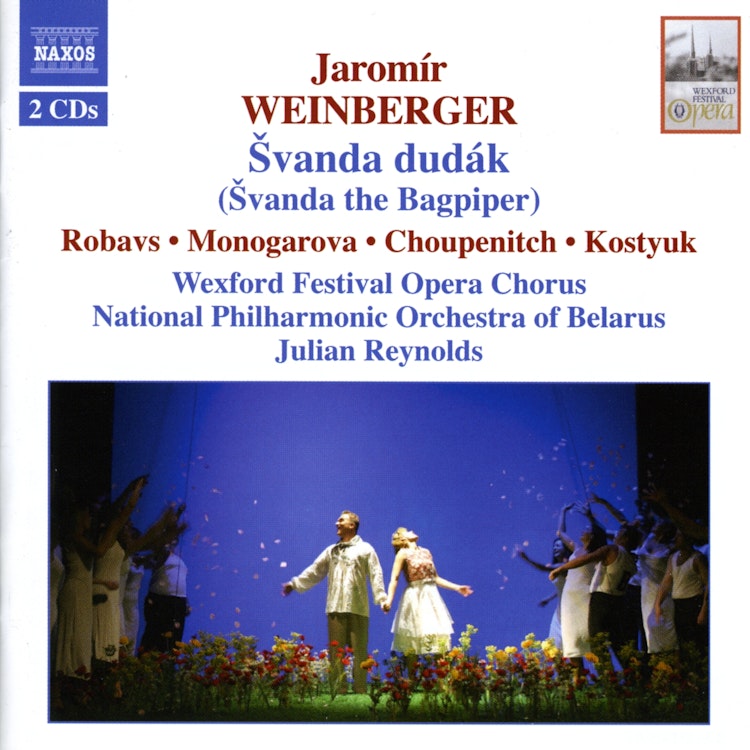
This recording captures the Wexford Festival Opera's 2003 production of Švanda dudák, known for its courageous programming of neglected repertoire.
Compositional Technique
The opera's overture is over ten minutes long and features more than twenty tempo changes, reflecting a return to Romanticism.
Composer Biography
Jaromír Weinberger, a Czech Jew, was forced to assimilate and keep moving due to concrete historical factors, eventually fleeing to the United States in 1939.
Critical Reception
W.J. Henderson, reviewing the Met premiere, praised Weinberger's contrapuntal mastery and rich orchestral texture, noting the score's 'élan, an unction and a gaiety of mind'.