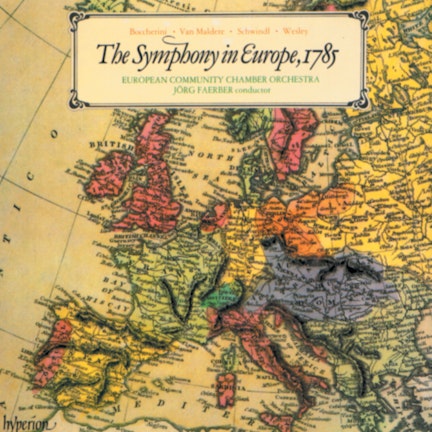
C.E.F. Weyse, born in Altona, Holstein, in 1774, received his early musical education in singing, piano, and violin in his hometown and Hamburg.
Composition History
Weyse composed seven symphonies between 1795 and 1799, possibly for the concerts of Det musikudøvende Selskab, and never wrote any more.
Composition History
Weyse's symphonies were sometimes adapted for other purposes; for example, the finale of Symphony No. 2 was reworked as an overture for the play Sovedrikken in 1800-1801.
Composer's Artistic Vision
Weyse's self-biography from 1820 states that he first truly learned to know Mozart's and Haydn's symphonies and studied the effect of wind instruments in the musical society Det musikudøvende Selskab.
Performer Biography
Det Kongelige Kapel (The Royal Danish Orchestra) has a history spanning over 500 years, with its roots tracing back to a royal corps of trumpeters and timpanists established in 1448.
Historical Context
The orchestra required by Weyse in his symphonies, including one or two flutes, two oboes, two bassoons, two horns, and a 4- or 5-part string section, was typical for Haydn and Mozart.
Composer Biography
Weyse moved to Copenhagen in 1789 to study with court Kapellmeister J.A.P. Schulz, who had recently arrived from Berlin.