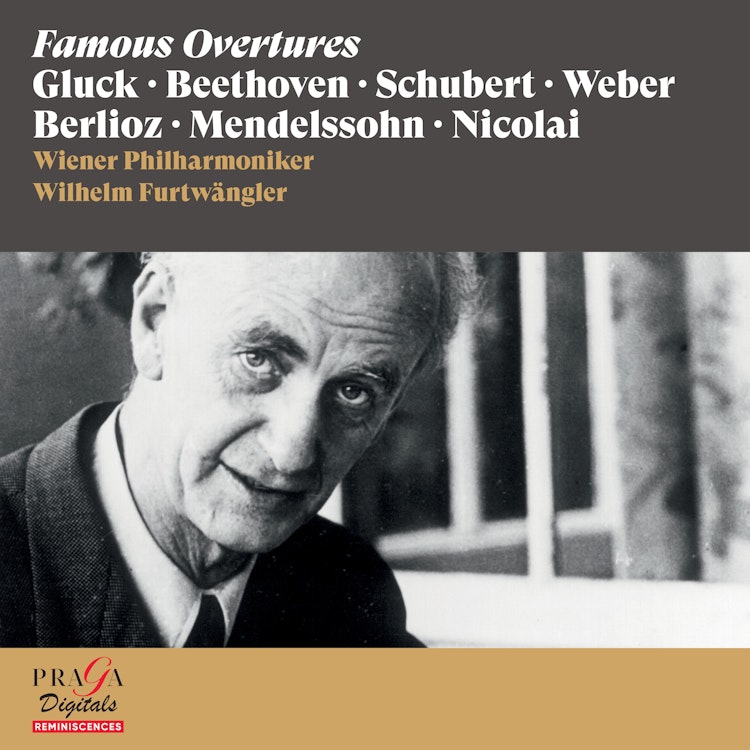
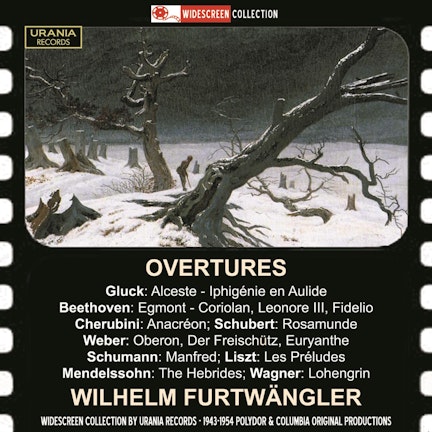
Wilhelm Furtwängler: Famous Overtures [Gluck, Beethoven, Schubert, Weber...]
1/1/2017, 9 Tracks, 1:19:40
Featuring
Wilhelm Furtwängler
Wiener Philharmoniker
Christoph Willibald Gluck
Ludwig van Beethoven
Franz Schubert
Carl Maria von Weber
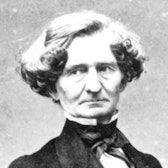
Hector Berlioz
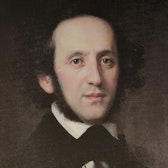
Felix Mendelssohn Bartholdy
Otto Nicolai
Did you know?
1/7
Performer Biography
By 1922, Wilhelm Furtwängler was appointed successor to Arthur Nikisch as director of both the Leipzig Gewandhaus Orchestra and the Berlin Philharmonic Orchestra.
Interpretation
Wilhelm Furtwängler believed that an interpreter must make music live through rigorous preparation, but also allow for essential improvisation to keep the work alive and not 'prefabricated'.
Performer Biography
Wilhelm Furtwängler resigned his post in December 1934 for political reasons after the 'Hindemith Affair,' where Adolf Hitler and Hermann Göring forbade him from performing Mathis der Maler.
Performer Biography
Wilhelm Furtwängler became a conductor at age 20, leading Anton Bruckner's Symphony No. 9 in Munich.
Interpretation
For Wilhelm Furtwängler, every concert was a unique, non-reproducible experience, as he believed in the fundamental form of musical activity being free improvisation.
Performer Biography
Wilhelm Furtwängler, the conductor on this album, was the son of archaeologist Adolf Furtwängler and grew up in a humanistically influenced home in Munich.
Performer Biography
Wilhelm Furtwängler became joint musical director of the Bayreuth Festival in 1931 alongside Arturo Toscanini, and two years later became its sole director.
You might also enjoy...
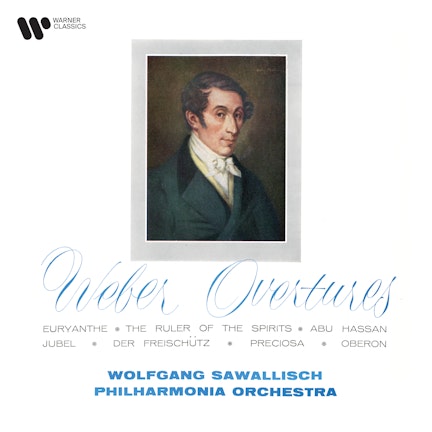
Weber: Overtures
Wagner: Overtures & Preludes / Berlioz / Beethoven
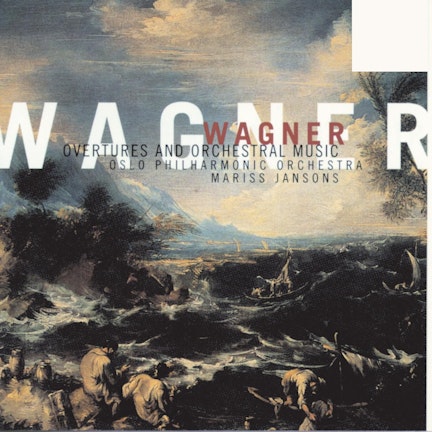
Richard Wagner - Overtures & Orchestral Music
Wagner: Overtures & Orchestral Music
Wagner: Overtures and Preludes from the Operas
Overtures
Wagner: Siegfried Idyll; Ouvertüren: Lohengrin, Die Meistersinger von Nürnberg, Der fliegende Holländer