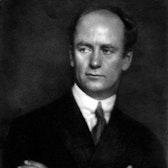
Wilhelm Furtwängler resigned his post in Germany in December 1934 for political reasons, after taking on numerous Jewish artists which was criticized by the National Socialist regime.
Performer Biography
Wilhelm Furtwängler became the director of the Leipzig Gewandhaus Orchestra and the Berlin Philharmonic Orchestra in 1922, succeeding Arthur Nikisch.
Interpretation
Wilhelm Furtwängler believed an interpreter should make music come alive through rigorous preparation, but also allow for essential improvisation, making each concert a unique experience.
Compositional Technique
Franz Liszt is credited with creating the symphonic poem, a genre of orchestral work whose conception and structure are determined by an external poetic, descriptive, or philosophical argument.
Composer's Artistic Vision
Wilhelm Furtwängler criticized the individualism in contemporary art, believing it led to a loss of objectivity and universal perspective, which he saw as detrimental to the art of conducting.
Compositional Technique
A common innovation in Liszt's symphonic poems is the use of a basic theme that reappears throughout the work in various forms and combinations.
Performer Biography
Wilhelm Furtwängler, the conductor on this album, was the son of archaeologist Adolf Furtwängler and grew up in a humanistically influenced home in Munich.
You might also enjoy...
Schmidt-Kowalski, T.: Impressionen / Meditationen / Leidenschaft Und Fruher Tod / Die Wiederkehr Von Atlantis / Sternennacht
Tchaikovsky: Francesca da Rimini, Italian Capriccio & Serenade for Strings
Paul Paray conducts Dances of Death
Leopold Stokowski: Decca Recordings 1965-1972 - Original Masters
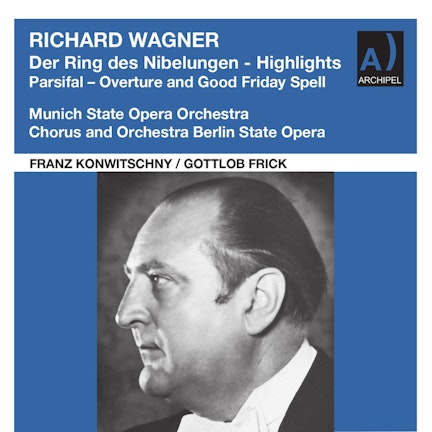
Wagner: Orchestral Works (Remastered 2023) [Live]
Liszt: Orchestral Works
Symphonic Works by Anatoly Lyadov
Karajan A-Z: Holst - Liszt
Scriabin: The Poem of Ecstasy / Rimsky-Korsakov: Capriccio Espagnol / Dvorák: Slavonic Dance No.2
Ormandy Conducts Schoenberg: Verklärte Nacht and Works by Honegger, Kreisler, Schumann and More