The Capriccio in B-flat major (BWV 992) includes a lamentation movement with a four-bar descending varied chaconne bass, a technique Bach later used in the Crucifixus of the B Minor Mass (BWV 232) as a symbol of mourning.
Instruments
The harpsichord used for this recording was made by Philippe Humeau in 2014, modeled after an instrument by Johann Heinrich Gräbner from 1722.
Critical Reception
The Italian Concerto in F major (BWV 971) was praised soon after its 1735 publication as a 'perfect model of a well-organised concerto for a single instrument' by Johann Adolph Scheibe, a contemporary critic.
Critical Reception
Johann Nikolaus Forkel, Bach's first biographer, emphasized the unique status of the Chromatic Fantasia and Fugue in D minor (BWV 903), stating in 1802 that it 'is unique and has never known an equal'.
Composer's Artistic Vision
Johann Sebastian Bach's keyboard compositions set standards for subsequent generations of composers through their musical logic and expressive tonal language.
Compositional Technique
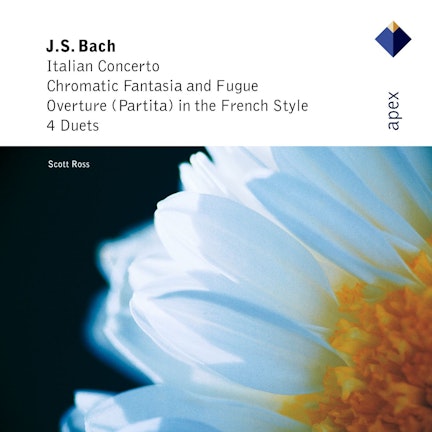
Bach's Italian Concerto in F major (BWV 971) brilliantly applies the three-movement Italian concerto form to the harpsichord by allocating the two manuals to either solo or tutti parts, mimicking an orchestra.
Composition History
The Capriccio in B-flat major (BWV 992) is one of Bach's few openly programmatic compositions and may depict the departure of his younger brother Johann Jacob or his schoolfriend Georg Erdmann.
You might also enjoy...
J.S. Bach: Keyboard Works
Bach, J.S.: Italian Concerto; Partita in B minor etc.
Bach: The Six French Suites, Little Preludes
Froberger: Toccatas and Partitas / Meditation / Lamentation On the Death of Ferdinand Iii
The Couperin Family
Bach, JS : Harpsichord Recital
Le Clavecin Poétique
Famous Works for Harpsichord
Froberger Works for Harpsichord
J.S. Bach: An Italian Journey
Clérambault, Marchand: Complete Harpsichord Music
Toccata: From Claudio Merulo to Johann Sebastian Bach