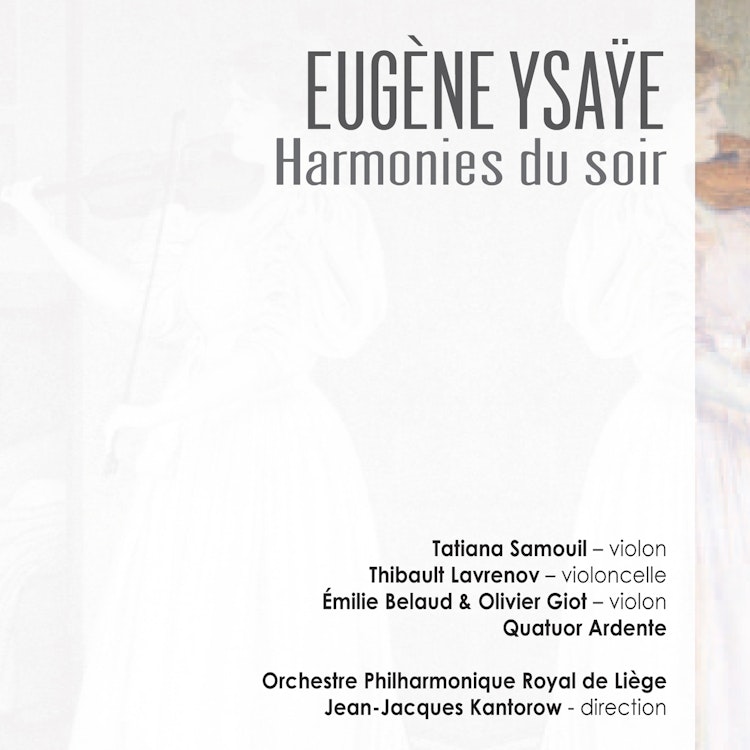
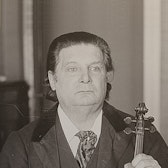
During World War I, Ysaÿe took refuge in the United States, where he was already known as "the King of the Violin" and "the Sublime Emperor of Extravaganza."
Composer's Artistic Vision
Ysaÿe believed the "poem" form was a progression in his musical writing, allowing for greater emotion and combining musical interest with true virtuosity.
Compositional Technique
Ysaÿe's "poems" for string instruments and orchestra are typically single-movement works with no strict formal constraints, allowing for varied emotional expression.
Critical Reception
Over time, Eugène Ysaÿe's reputation as a brilliant virtuoso overshadowed his qualities as a composer, leading to a need for rediscovery of his works.
Composer Biography
Eugène Ysaÿe, a Belgian violinist and composer, met Franz Liszt, a Hungarian pianist and composer, in 1883 at a conference in Zurich, which influenced Ysaÿe's career path.
Composition History
The poem Exil, Op. 25, was written in New York in 1917, reflecting Ysaÿe's feelings of distress and loneliness during his time in the United States.
Composer's Artistic Vision
Ysaÿe considered his early compositions to be "devoid of any originality or value" and later turned to composing "poems" for string instruments and orchestra.
You might also enjoy...
Finzi: Cello Concerto and other Orchestral Works
Barber - Copland - Ginastera
Vaughan Williams: Fantasia On "Greensleeves"; The Lark Ascending / Delius: Two Pieces; Two Aquarelles; Intermezzo / Walton: Two Pieces
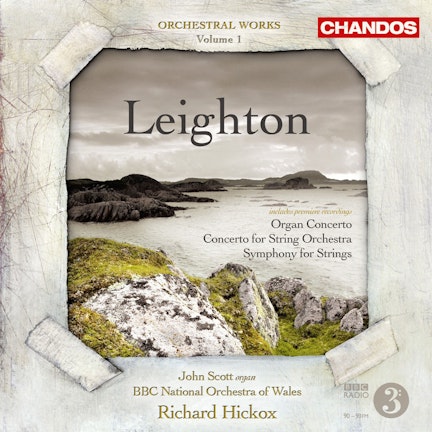
Leighton, K.: Orchestral Music, Vol. 1 - Symphony for Strings / Organ Concerto / Concerto for String Orchestra
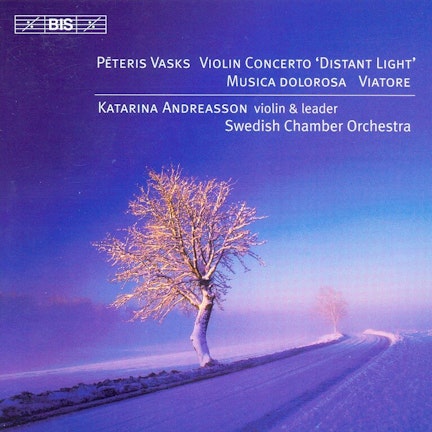
Vasks: Violin Concerto / Musica Dolorosa / Viatore
Tippett: Concertos & Fantasia
Vaughan Williams: Fantasia on a Theme by Thomas Tallis/The Lark Ascending etc.
Spanish Works for String Orchestra
Orchestral Music (Spanish) - Turina, J. / Manen, J. / Rodrigo, J. / Lamote De Grignon, R.
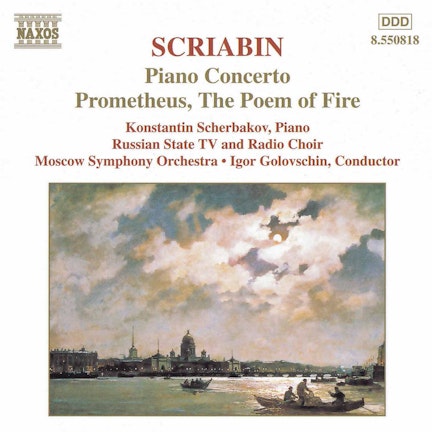
Scriabin: Piano Concerto / Prometheus
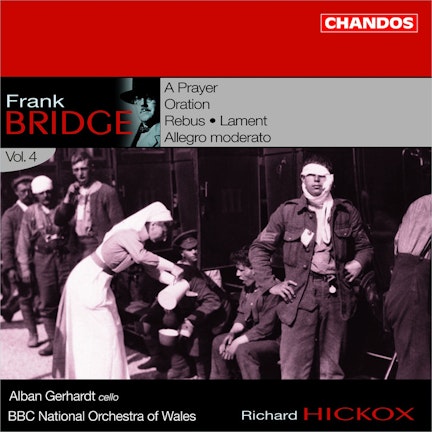
Bridge: Orchestral Works, Vol. 4
20th Century Classics: Tippett
Vaughan Williams: The Lark Ascending; Fantasia On A Theme By Thomas Tallis; Symphony No.5